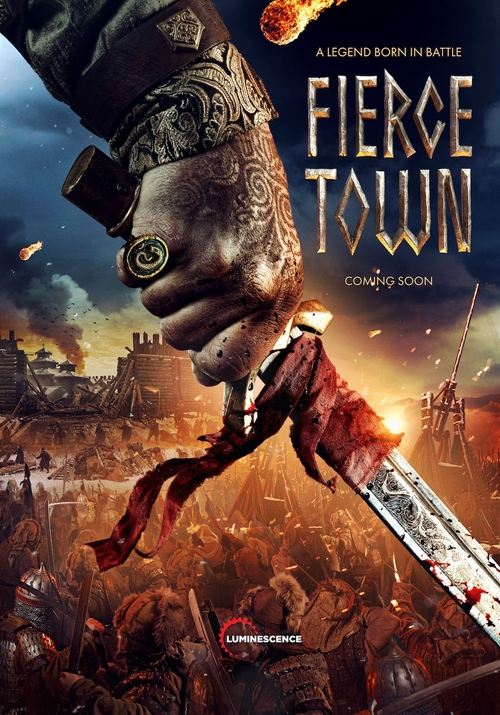
Fierce Town
Plot
By the middle of the 12th century, the borders of the Mongolian Empire stretched from the Adriatic and Mediterranean Seas in the west to the southern lands of China in the east. The Mongolian army, under Khan Batu’s command, was known for its invisibility, destroying anyone who dared to challenge them. Yet, even within their central territories, some areas refused to bow to the Genghisids. Kozelsk was one of them. The Mongolian armies bypassed the high walls of this small town, considering that "the skin of the wolf was not worth the risk of encountering its teeth".However, one of the Khan’s commanders harbored a grudge against the town's citizens. Now, the people of Kozelsk must face a battle against the strongest army in the world, with no hope of victory. This is a story about people facing their death. Some try to escape, others are willing to do anything to survive, but most are prepared to protect their city from the relentless storms of the Mongolian hordes.
Get the Weekly Woke Watchlist
New and trending movies scored for woke bias, preachy messaging, and forced political themes — before you waste your evening.
No spam. One useful email per week.
Overall Series Review
Categorical Breakdown
The plot centers on the defense of a historical community (Rus' people) against a foreign invader (Mongols). Character roles and actions are judged solely on merit, courage, and loyalty in the military defense. The film is a national epic about a specific historical-ethnic group fighting for survival, not a lecture on systemic oppression.
The entire story celebrates the defense of the historical Rus' home culture and its people against an external enemy. Core institutions and the city itself are viewed as fundamentally valuable and worth dying for. The film is an act of historical remembrance and gratitude for the sacrifices of ancestors who resisted conquest.
The main plot is a traditional military siege centered on male military and political figures (monk/centurion, former serf, young prince). Some sources mention the presence of a 'female warrior' joining the defense. While this suggests a strong, competent female character, the narrative does not appear designed to emasculate the male protagonists, nor is there any evident anti-natal or anti-family messaging.
The story is a historical war epic focused on survival and military conflict in a 13th-century setting. The included character dynamics point to a traditional, heterosexual conflict over a woman. There is no evidence of modern sexual ideology being centered, nor any deconstruction of the nuclear family unit.
A central protagonist is a monk who is also a former centurion. The faith of the Orthodox Christian defenders is positioned as a key source of moral strength and resolve in their resistance against the invading force. Traditional religion is a source of strength for the protagonists, not the root of evil.
Get the Weekly Woke Watchlist
New and trending movies scored for woke bias, preachy messaging, and forced political themes — before you waste your evening.
No spam. One useful email per week.