Vikings
Season 2 Analysis
Season Overview
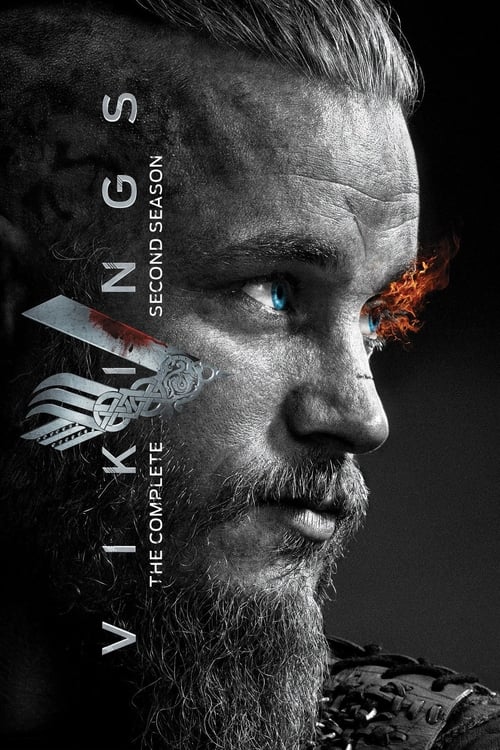
Season two brings crises of faith, of power, of relationships. Brothers rise up against one another. Loyalties shift from friend to foe, and unlikely alliances are formed in the name of supremacy. Ragnar’s indiscretions threaten his marriage to Lagertha, tearing him and his beloved son apart. Plots are hatched, scores are settled, blood is spilled…all under the watchful eyes of the gods.
Season Review
Categorical Breakdown
The casting remains historically authentic to the setting of Norse and Saxon conflicts. Characters are judged primarily by their skill in combat, political acumen, and loyalty, representing a universal meritocracy of the age. The conflict is not framed along a modern intersectional hierarchy; rather, it is a clash between different groups of people based on geography, religion, and power.
The Norse culture is not vilified; instead, it is often presented as having a more open and progressive view on women's rights compared to the Anglo-Saxons. The Viking characters express pride and ambition for their home and ancestors, not self-hatred. However, the culture is shown to be brutal and institutions like family are constantly destabilized by selfish individual ambition and violence.
The core of the season's domestic plot revolves around the primary female lead, a warrior, choosing to leave her husband and home after his betrayal to establish herself as an Earl entirely on her own merit, achieving her own power. This is a clear representation of the 'Girl Boss' trope, showing female ambition supplanting the domestic role. Men are often shown to be driven by simple lust or short-sighted politics, though the male protagonist ultimately succeeds in his ambitions.
The main protagonist and his wife explicitly invite the male former-monk to join them in their bed, suggesting a non-normative sexual dynamic is readily accepted, even sought out, by the protagonists. The Viking culture's supposed open-mindedness regarding sexual fluidity is positively contrasted with the sexual prudishness of the Christian world, though alternative sexualities are not the primary focus of the plot.
Religion is a constant and central theme. Christian characters are often depicted as hypocritical, engaging in extreme, un-Christian brutality like crucifying enemy combatants. The former-monk character is trapped in a spiritual crisis, embodying the moral relativism that comes from comparing the violence and moral codes of Paganism and Christianity. Faith is not consistently presented as a source of transcendent moral strength.