Vikings
Season 3 Analysis
Season Overview
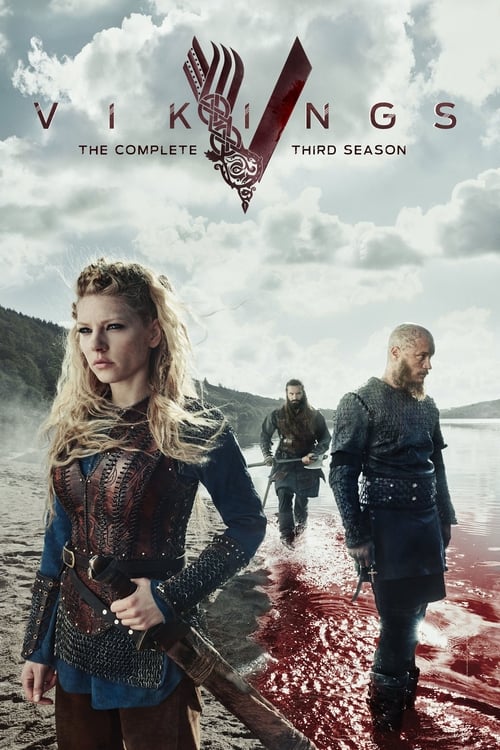
With the promise of new land from the English, Ragnar leads his people to an uncertain fate on the shores of Wessex. King Ecbert has made many promises and it remains to be seen if he will keep them. But ever the restless wanderer, Ragnar is searching for something more … and he finds it in the mythical city of Paris.
Season Review
Categorical Breakdown
The core conflict is cultural and religious (Pagan Norse vs. Christian Saxon/Frank), not racial. All major civilizations shown are of a similar ethnic background, with character judgment based entirely on actions, skill, and political allegiance rather than immutable characteristics. There is no depiction of 'race-swapping' or 'vilification of whiteness' in the context of the historical setting.
The Norse culture (the protagonists) is not demonized; their institutions and ancestral faith are treated with reverence, despite their brutality. While the 'Western' Saxon and Frankish cultures are presented with highly corrupt and treacherous leaders like King Ecbert, the critique is directed at political and religious hypocrisy within the Christian kingdoms, not a blanket deconstruction of the entire Western civilizational heritage. The show treats both cultures' ancestors with a rough parity of complexity and savagery.
The score is high due to the pervasive 'Girl Boss' trope, most notably with Lagertha. She is established as an independent Earl and a formidable warrior who repeatedly demonstrates flawless competence and is explicitly described in commentary as a 'modern woman' and 'feminist icon' who does not need a man. The narrative also features Queen Aslaug neglecting her maternal duties for personal fulfillment, with a resulting tragedy for the children's caretaker, which frames motherhood as an impediment to freedom.
Alternative sexuality is strongly implied as subtext rather than overtly centered. The deep, non-sexual emotional bond between Ragnar and Athelstan is consistently highlighted, and there is historical record of a filmed kiss scene between Lagertha and Queen Kwenthrith for this season that was ultimately cut from some versions, indicating an intent to explore bisexuality. This subtextual groundwork and creative intent elevate the score above a 1, but it avoids the overt lecturing of a 10.
The spiritual landscape is complex and seriously treated, avoiding a 'spiritual vacuum' score. However, a pattern emerges where the prominent Christian characters are often shown to be corrupt and hypocritical (King Ecbert's deceit, the massacre of settlers). Meanwhile, the pagan side receives validation through the mystery of the god Harbard, and the show ultimately presents all faith as a source of strength, struggle, and sometimes, political manipulation.