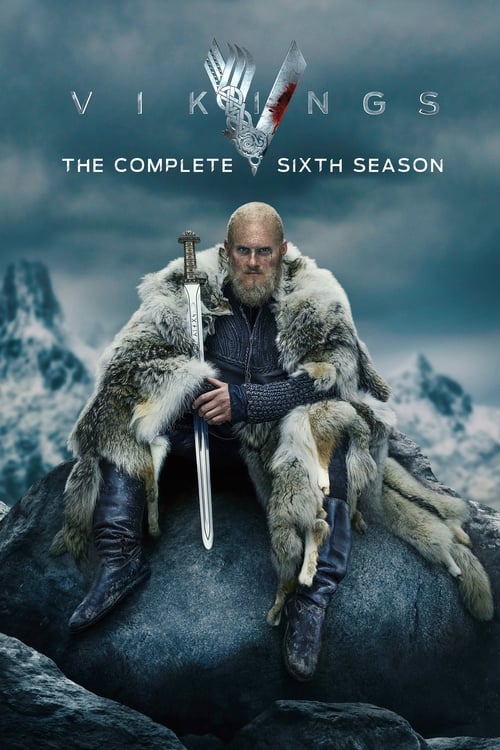
Vikings
Season 6 Analysis
Season Overview
The final season finds Bjorn now the king of Kattegat, while Ivar is a fugitive in Russia and Lagertha plans a peaceful retirement to a country farm.
Season Review
Categorical Breakdown
The Ubbe storyline in North America creates a clear moral hierarchy: the white Viking protagonist is successful only when he abandons the historical Viking way of conquest and adopts a policy of peaceful coexistence and respect with the indigenous Mi'kmaq people. The narrative portrays the non-white culture as an uncorrupted ideal that Viking civilization should emulate. The Viking failure is implicitly tied to their European, conquest-driven heritage.
A central theme is the deliberate and explicit deconstruction of the Viking ancestral culture and heritage. Characters remark that the 'Golden Age of the Vikings is gone,' framing their civilization as inherently flawed, chaotic, and self-destructive. The final fates of the major pagan characters reinforce this, with the Christian world (King Alfred’s Wessex and Rus converts) positioned as the stable, ascendant power that replaces the failing Norse culture. Ancestral institutions are shown collapsing under their own weight.
Female characters consistently prioritize political and personal power over traditional family roles. Gunnhild chooses to commit suicide and join her dead husband in Valhalla rather than accept a new marriage and political life with King Harald. Ingrid, a woman previously sold into slavery, uses witchcraft and political maneuverings to end the series as the sole Queen of Kattegat. This culmination elevates the 'Girl Boss' political archetype to the highest seat of power in the Viking world after the male lines of succession have destroyed themselves.
The main plot of the final season does not center on alternative sexualities or gender theory. The narrative focus remains on the heterosexual power struggles of the sons of Ragnar, political marriages, and patrilineal succession. Prior exploration of female bisexuality in the series is concluded by earlier seasons, leaving this season's content largely focused on a normative structure.
The final arc does not exhibit hostility toward religion in general. Instead, the narrative explicitly favors the Christian faith as the foundation of a stable future, as seen with King Alfred's ultimate triumph over the pagan Vikings and the conversion of Ragnar's son, Hvitserk. Ubbe also finds peace with his former Christian monk companion. The show promotes the idea of a single, transcendent moral law (Christianity) as the solution to the moral relativism and chaotic violence of the Pagan 'old ways.' This is an anti-Pagan, not an anti-Theist, conclusion.