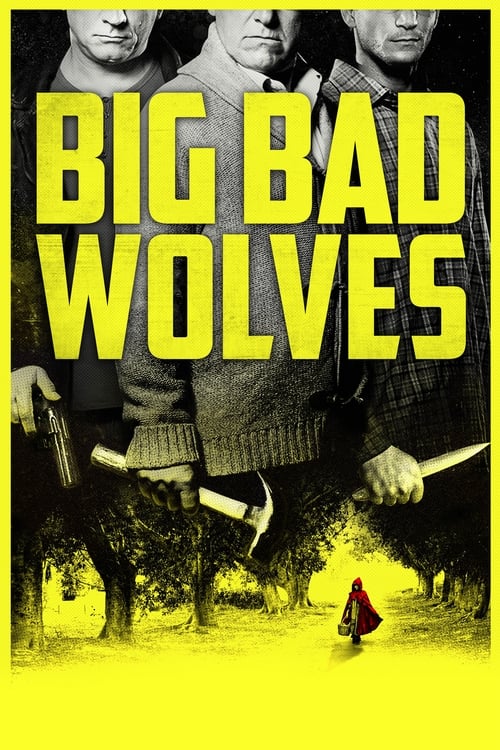
Big Bad Wolves
Plot
The twisted paths of three very different men brutally collide due to a chain of unspeakable murders: a grieving father who has been doomed to seek vengeance and a police detective who boldly crosses the narrow boundary between law and crime meet a religion teacher suspected of being the murderer.
Get the Weekly Woke Watchlist
New and trending movies scored for woke bias, preachy messaging, and forced political themes — before you waste your evening.
No spam. One useful email per week.
Overall Series Review
Categorical Breakdown
The film’s central conflict is a universal examination of vengeance and justice, not a discussion of identity hierarchy. All main characters are Israeli men, and their actions are judged on their moral merit, not on intersectional characteristics. The focus is on the content of their monstrous souls, not their group identity.
The movie provides an internal critique of certain negative aspects of Israeli society, such as a climate of 'existential anxiety,' 'macho behavior,' and police overreach, which frames the violence. However, it does not demonize the culture entirely; key elements like the nuclear family and Jewish cultural background (e.g., burial rites, the 'Jewish mother' trope) are present as functional, though strained, cultural shields.
The main plot is nearly an entirely male-driven drama, focusing on the actions and failures of a cop, a father, and a suspect. Women appear only as victims (the murdered girls) or in extremely peripheral, domestic roles, such as the father’s mother via phone call. The narrative lacks any ‘Girl Boss’ or anti-natalist messages due to the almost total absence of women in positions of power or central action.
The story is solely concerned with the pursuit of a heterosexual serial child murderer and the subsequent moral corruption of the men seeking revenge. The narrative is structurally normative, centering on the threat to the traditional male-female pairing (father-daughter) and nuclear family. There is no presence of alternative sexual ideology or gender theory lecturing.
The core moral ambiguity stems from the personal pursuit of vengeance and how it corrupts the individual. The main suspect is a religion teacher, which may imply a critique of hypocrisy, but the plot also features a key religious reference (Jewish burial law) that grounds the cultural significance of the crime. The film operates in a moral 'gray area' rather than directly attacking traditional faith as the root of evil.
Get the Weekly Woke Watchlist
New and trending movies scored for woke bias, preachy messaging, and forced political themes — before you waste your evening.
No spam. One useful email per week.