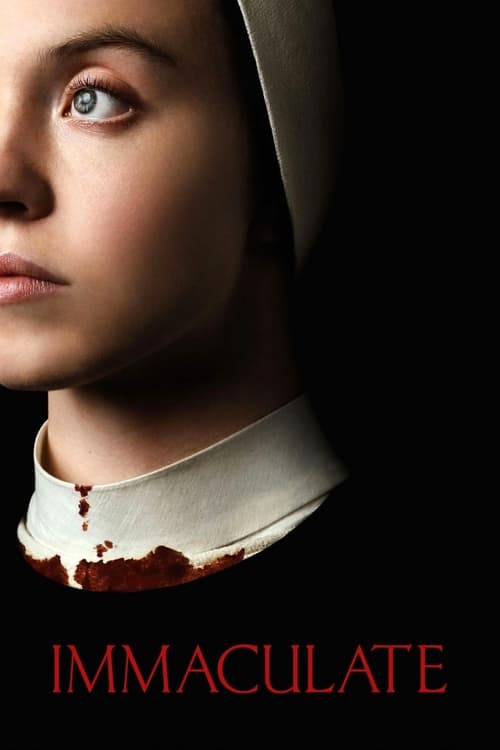
Immaculate
Plot
An American nun embarks on a new journey when she joins a remote convent in the Italian countryside. However, her warm welcome quickly turns into a living nightmare when she discovers her new home harbours a sinister secret and unspeakable horrors.
Get the Weekly Woke Watchlist
New and trending movies scored for woke bias, preachy messaging, and forced political themes — before you waste your evening.
No spam. One useful email per week.
Overall Series Review
Categorical Breakdown
The movie’s conflict is centered on the power dynamic between a vulnerable woman and a religious institution, not on race or immutable characteristics in an intersectional sense. The protagonist is an American nun in an Italian setting, but her 'whiteness' or race is not a factor for either vilification or privilege in the narrative.
The film demonstrates hostility toward a foundational Western institution, the Catholic Church, by framing the entire Italian convent as a corrupt, murderous, and repressive hellscape. The ancestors' faith and traditions are subverted and used as a mask for a grotesque eugenics experiment. The protagonist's ultimate victory is an escape from and violent destruction of this institution.
The movie is structured as an explicit parable about female bodily autonomy in a post-Roe v. Wade cultural climate. The men in power, particularly the priest and cardinal, are portrayed as an abusive, patriarchal system that reduces the protagonist to a biological 'vessel' against her will. The climax involves a violently defiant act of anti-natalism, where the forced pregnancy is terminated as a 'war cry' for self-sovereignty.
The narrative does not include any material related to alternative sexualities, gender ideology, or the deconstruction of the nuclear family. The sexual element is focused on the forced virgin pregnancy within the traditional religious context, making this category irrelevant to the film’s themes.
Traditional religion, specifically Catholicism, is presented as the absolute root of evil. The clergy (priest and cardinal) are the central villains, engaging in murder, torture, and scientific blasphemy in the name of a twisted quest for a new Messiah. Faith and religious iconography are shown to be instruments of oppression and violence, not a source of strength or transcendent morality.
Get the Weekly Woke Watchlist
New and trending movies scored for woke bias, preachy messaging, and forced political themes — before you waste your evening.
No spam. One useful email per week.