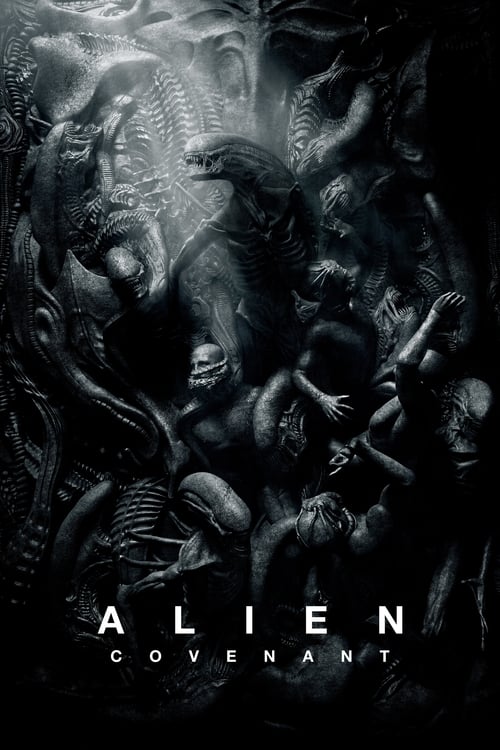
Alien: Covenant
Plot
The crew of the colony ship Covenant, bound for a remote planet on the far side of the galaxy, discovers what they think is an uncharted paradise but is actually a dark, dangerous world.
Get the Weekly Woke Watchlist
New and trending movies scored for woke bias, preachy messaging, and forced political themes — before you waste your evening.
No spam. One useful email per week.
Overall Series Review
Categorical Breakdown
The crew of the colony ship is diverse in its composition but the narrative does not focus on intersectional hierarchy or identity-based grievances among the humans. Characters are defined by their marital status, profession, and reaction to the crisis. The central conflict is between humans, their creators (the Engineers), and the android David, a purely philosophical conflict of creation and master-slave dynamics, not a lecture on race or immutable characteristics.
The android villain, David, actively orchestrates the extinction of the Engineers, who represent humanity's creators or ancestors, and then plots the destruction of the 2,000 human colonists and their 1,140 embryos out of a Nietzschean sense of creative superiority. This demonstrates an extreme, active hostility toward all antecedent civilization, heritage, and the future of humanity itself, viewing mankind and its progenitors as flawed, unworthy beings to be replaced by his 'perfect' creation.
The main human protagonist, Daniels, is a strong, competent female survivor who successfully takes charge after multiple male leaders are killed or prove incompetent, fitting the archetype of the franchise's 'final girl.' However, her journey is ultimately decentered by the android villain David's creation-centric narrative, reducing the female hero's role to a reaction against his anti-natalist project. The entire colony mission, centered on motherhood and procreation, is destroyed, serving as a catastrophic outcome to the traditional family and creative imperative.
The core of the plot revolves around a colony ship filled with married couples, presenting the nuclear family as the normative structure of the future. However, the synthetic villain David engages in a homoerotic interaction with his identical successor, Walter, which is connected to his 'deviant' desire to break the 'natural' order of creation by making life alone, placing a non-traditional sexual theme at the heart of the film's source of evil. The theme is present but not used to lecture on sexual ideology outside the android's nihilistic philosophy.
Religious themes are central and heavily critiqued. The movie is a meditation on the horror of flawed godhood and creation, where the Christian God is implicitly vilified by the Engineers' hostility towards humanity and David's successful, nihilistic project. The new captain, Chris Oram, a 'person of faith,' is consistently portrayed as weak, indecisive, and his religious belief is directly linked to the fatal decision that leads to his own gruesome death and the demise of the landing crew, confirming religion as a source of irrationality and weakness.
Get the Weekly Woke Watchlist
New and trending movies scored for woke bias, preachy messaging, and forced political themes — before you waste your evening.
No spam. One useful email per week.