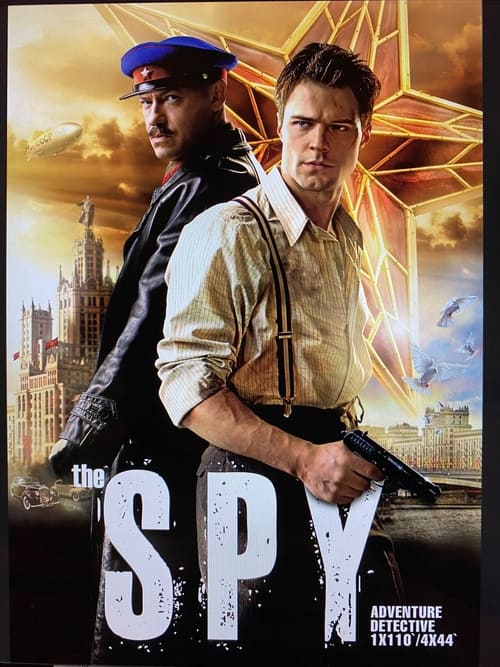
The Spy
Plot
Spring 1941. Center of Moscow. Duel of the two intelligence services turns more and more tense.
Get the Weekly Woke Watchlist
New and trending movies scored for woke bias, preachy messaging, and forced political themes — before you waste your evening.
No spam. One useful email per week.
Overall Series Review
Categorical Breakdown
The casting is historically and ethnically authentic to the 1941 Soviet setting. The central conflict is purely ideological and national (Soviet versus Nazi German) rather than based on race or intersectional hierarchy. Character success is tied directly to espionage competence and loyalty to the state.
The narrative is a strong celebration of defending the national homeland against the imminent threat of Nazi invasion. The film romanticizes the Soviet national aesthetic, presenting Moscow as an impressive, modern 'imperial' capital, which is the opposite of civilizational self-hatred. It frames the national intelligence services as the protectors of the state.
The core action plot is centered on two male NKVD officers, who embody traditional masculinity, protective behavior, and competence. Female characters are secondary to the action and are depicted in traditional roles of the time period, such as the movie star pursued by one of the male heroes. There is no 'Girl Boss' trope, nor is there anti-natal or anti-family messaging.
The film is an action thriller set in a historically conservative, pre-WWII Soviet environment. The focus is strictly on the espionage plot and traditional heterosexual dynamics, such as a male hero courting a female movie star. There is no inclusion or promotion of alternative sexual ideologies, deconstruction of the nuclear family, or gender theory.
The setting is the officially atheist Soviet Union, which inherently creates a spiritual vacuum where state ideology is paramount. The film does not feature an active spiritual or religious component, but it also does not engage in any direct vilification of faith or Christian figures. The morality presented is one of loyalty and state duty, which is moral-objective within the context of the Soviet defense against Nazism.
Get the Weekly Woke Watchlist
New and trending movies scored for woke bias, preachy messaging, and forced political themes — before you waste your evening.
No spam. One useful email per week.