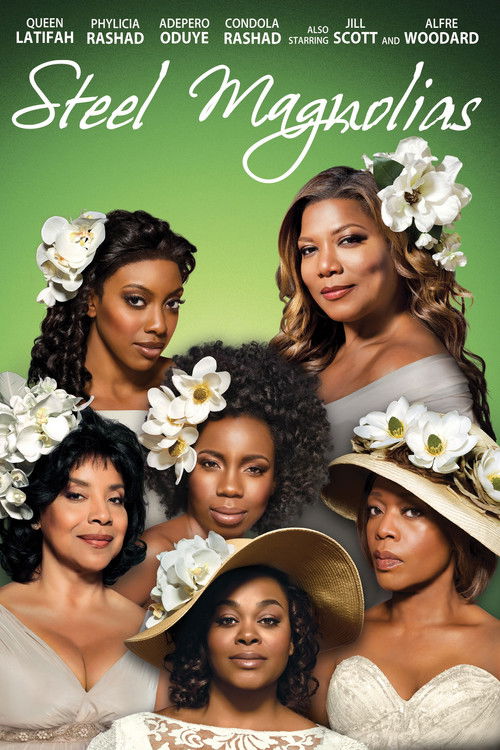
Steel Magnolias
Plot
In an updated contemporary version of the beloved stage play and 1989 film, "Steel Magnolias" chronicles the lives and friendship of six women in Louisiana. Supporting each other through their triumphs and tragedies, they congregate at Truvy’s beauty shop to ponder the mysteries of life and death, husbands and children - and hair and nails - all the important topics that truly unite and celebrate women.
Get the Weekly Woke Watchlist
New and trending movies scored for woke bias, preachy messaging, and forced political themes — before you waste your evening.
No spam. One useful email per week.
Overall Series Review
Categorical Breakdown
The movie takes a property traditionally featuring a white cast and restages it with an all-African American cast in a Southern setting, an act of historical race-swapping. The casting choice prioritizes immutable characteristics over colorblind or traditional casting, immediately activating the 'forced insertion of diversity' metric. However, the narrative itself does not proceed to lecture on systemic oppression or white vilification.
The narrative remains a celebration of community, friendship, family, and resilience within a traditional small-town setting in Louisiana. The story embraces core Western institutions like family and marriage, serving as a shield against the chaos of personal tragedy. There is no framing of the home culture or Western ancestors as fundamentally corrupt.
The main plot revolves around a woman's determined choice to marry and bear a child, knowing it poses a fatal health risk. The film's ultimate emotional conclusion celebrates her choice and the life of her son, a strong counter to anti-natalism. The main female characters possess flaws and complexities, rather than being instantly perfect 'Girl Boss' archetypes. The male characters (husbands/fathers) are portrayed as supportive members of the family unit, not as emasculated or incompetent figures.
The story adheres to a normative structure where the traditional male-female pairing and nuclear family serve as the standard of a stable home life. One character mentions a gay relative who became estranged from his brother, a minor plot point of family conflict that is not centered in the overall narrative. The film does not deconstruct the nuclear family or push any form of gender ideology.
The character Annelle undergoes a religious conversion to fundamentalist Christianity over the course of the movie. Her faith is ultimately presented as a source of profound strength and a transcendent moral perspective that helps her and others cope with immense tragedy, concluding with an Easter scene. The traditional faith is treated as a source of strength, not the root of evil.
Get the Weekly Woke Watchlist
New and trending movies scored for woke bias, preachy messaging, and forced political themes — before you waste your evening.
No spam. One useful email per week.