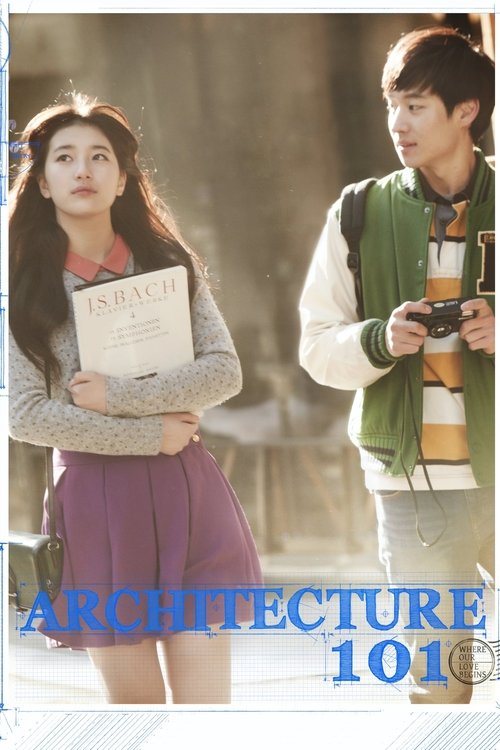
Architecture 101
Plot
When Seung-min was on his first year at the Academy of Architecture, he met Seo-yeon. She was a musician student, and Seung-min totally fell in love with her. Years have passed, and now he meets Seo-yeon again - she asks him to rebuild her father's old house.
Get the Weekly Woke Watchlist
New and trending movies scored for woke bias, preachy messaging, and forced political themes — before you waste your evening.
No spam. One useful email per week.
Overall Series Review
Categorical Breakdown
The narrative focuses on character merit, professional success, and personal emotional regret. Diversity themes are non-existent, and the casting is historically authentic to its South Korean setting. The only socioeconomic element is a subtle commentary on the regional/class divide within South Korea, with the female lead feeling like an outsider due to her provincial background, but this functions as a character insecurity, not a lecture on systemic oppression.
The central motif is the renovation of a childhood family home, a direct act of preservation and honoring personal and ancestral memory, which is the antithesis of civilizational self-hatred. The film is deeply nostalgic for 1990s South Korea and celebrates elements of the national culture and environment, particularly Jeju Island.
The female lead is complex and flawed, not a perfect 'Girl Boss.' She is driven by the need to renovate her father's home and her own emotional history, demonstrating both agency and vulnerability. The male lead is portrayed as passive in his youth, a trait acknowledged as authentic to Korean youth romance narratives, not a deliberate emasculation for ideological purposes. The dynamics are complementarian to the traditional romance genre.
The story is a completely normative heterosexual romance focused on the characters' inner emotional turmoil and past relationship. There is no presence of alternative sexual ideologies, deconstruction of the nuclear family, or gender theory lecturing.
Religion, faith, and anti-theism are entirely absent from the plot. The film's philosophical focus is on love, memory, and the emotional landscape of human relationships. Moral and emotional conflict stems from personal miscommunication and character flaws, not a critique of traditional morality or a spiritual vacuum.
Get the Weekly Woke Watchlist
New and trending movies scored for woke bias, preachy messaging, and forced political themes — before you waste your evening.
No spam. One useful email per week.