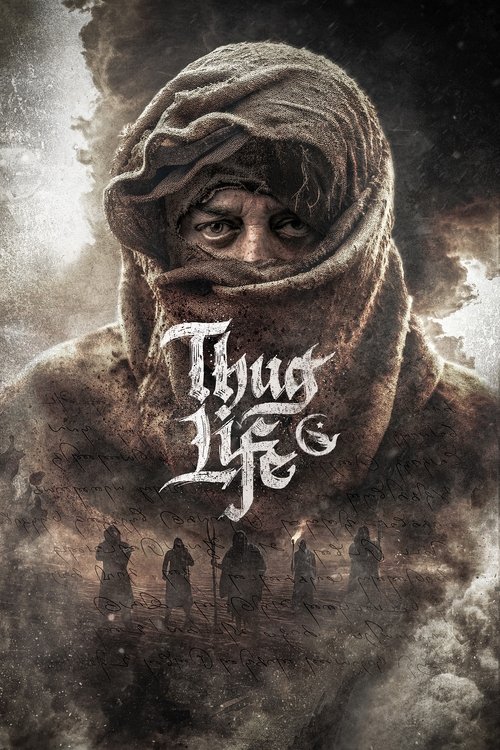
Thug Life
Plot
In a world ruled by crime and betrayal, mafia kingpin Sakthivel and his brother Manikkam rescue a young boy, Amaran, during a violent police shootout and raise him as their own. Years later, when an assassination attempt shakes Sakthivel's empire, suspicion turns inward. Consumed by vengeance, Sakthivel sets out to destroy the very family he once built.
Get the Weekly Woke Watchlist
New and trending movies scored for woke bias, preachy messaging, and forced political themes — before you waste your evening.
No spam. One useful email per week.
Overall Series Review
Categorical Breakdown
The narrative focus is entirely on a personal feud, betrayal, and a battle for power and succession within a criminal organization. Character merit is defined by competence in the gang hierarchy and loyalty to the alpha male. There is no evidence of Western-style intersectional hierarchy, vilification of 'whiteness,' or forced diversity commentary, as the film is rooted in a non-Western, genre-specific context.
The film is an Indian production set in an Indian context (New Delhi), and the corruption and betrayal explored are specific to the criminal underworld and the central family. There is no hostility or demonization directed toward Western civilization, its institutions, or its ancestors, as these are not the subject of the film's critique.
The core plot is a male-centric gangster drama focused on a father/son and brother conflict. Women function as supporting characters in traditional gender roles, such as the loyal wife (Jeeva) and the mistress (Indrani), whose roles are secondary to the central power struggle. The protagonist is a philandering patriarch, indicating a celebration of traditional male vitality and power, without the presence of a 'Girl Boss' trope or an anti-natal message.
The narrative contains no elements of queer theory, alternative sexualities, or gender ideology. The family unit presented, though corrupted by crime and infidelity, remains centered on the traditional male-female pairing, and the storyline does not include any lecturing on sexual or gender identity.
The film deals with classic spiritual themes of 'guilt, morality, and destiny' in the context of a life of crime, as the protagonist notes that the Lord of Death is fond of him. This acknowledges transcendent concepts. There is no evidence of explicit anti-theism, hostility toward a specific religion (such as Christianity), or a framing of objective morality as purely subjective 'power dynamics.'
Get the Weekly Woke Watchlist
New and trending movies scored for woke bias, preachy messaging, and forced political themes — before you waste your evening.
No spam. One useful email per week.