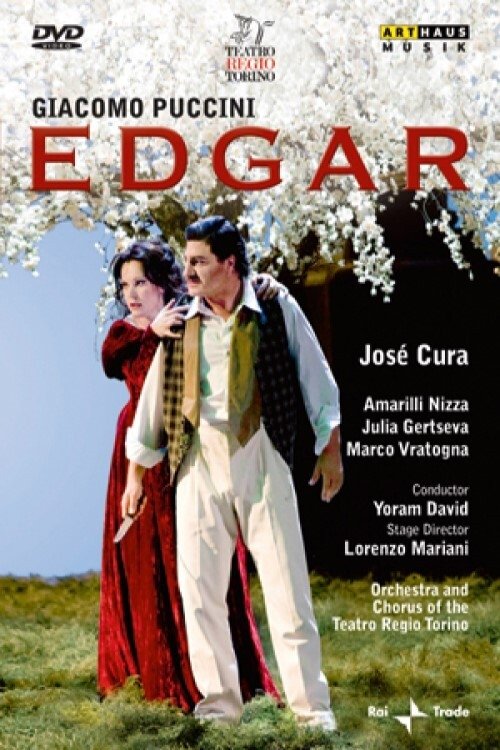
Puccini: Edgar (Teatro Regio di Torino)
Plot
Puccini’s operas are among the most beloved and best-known works in the classical repertoire, but Edgar may be unknown even to aficionados, at least as it is presented here. This original four-act version of Edgar, first performed in 1889, was believed lost for over a century when Puccini’s granddaughter Simonetta discovered the score fully intact in 2008. In addition to the third act’s funeral music, which Arturo Toscanini conducted at Puccini’s funeral in 1924, listeners may recognize the duet from the now-restored fourth act, cut by Puccini in subsequent revisions of the work: it bears more than a passing similarity to the third-act duet in Tosca.
Get the Weekly Woke Watchlist
New and trending movies scored for woke bias, preachy messaging, and forced political themes — before you waste your evening.
No spam. One useful email per week.
Overall Series Review
Categorical Breakdown
The narrative's central conflict is driven by the contrast between the chaste, local, Flemish village girl Fidelia and the exotic, destructive 'Moorish seductress/Gypsy' Tigrana. This polarization uses immutable characteristics (ethnicity/culture) to define the villain as the 'other,' which is the inverse of contemporary identity politics that vilifies 'whiteness' or elevates 'otherness.' The story is fundamentally character-driven on the man's moral choice between women, not a lecture on systemic oppression.
The central action involves the protagonist, Edgar, burning down his own home and running away from his tranquil, virtuous, and traditional Western village life for a life of 'orgies' and excess. However, the moral resolution of the story is Edgar’s deep regret and his attempt to return to the virtuous world represented by Fidelia, thus framing the Western home culture as the source of goodness he foolishly abandoned. There is no civilizational self-hatred in the core theme.
The female roles are rigidly defined as complementary opposites: Fidelia is the chaste and devoted ideal of pure love, while Tigrana is the dangerous, purely sensual 'femme fatale.' This classic operatic dichotomy avoids the modern 'Girl Boss' trope entirely. The narrative celebrates Fidelia's selfless love and devotion, and while Tigrana is a powerful figure of desire, she is ultimately the antagonist whose wickedness leads to her crime. Masculinity is not systematically emasculated; Edgar is a flawed knight/soldier.
The entire drama is a tragic heterosexual love triangle: Edgar is torn between Fidelia and Tigrana. The core social structure presented is the traditional male-female pairing and the village family unit (Gualtiero, Frank, Fidelia). There is no centering of alternative sexualities, deconstruction of the nuclear family as oppressive, or insertion of modern gender ideology within the plot or its presentation.
Religious and moral institutions are portrayed as forces for good. Gualtiero is a respected priest, and Fidelia's virtue is directly tied to her purity and moral constancy. Edgar attempts to repent by returning as a monk to denounce his sins, though the disguise itself is a deceit. The village life, which Edgar rejects, represents Christian virtue and community. Traditional religion is treated with respect as a source of moral law, and its symbols are invoked for repentance and ceremony.
Get the Weekly Woke Watchlist
New and trending movies scored for woke bias, preachy messaging, and forced political themes — before you waste your evening.
No spam. One useful email per week.