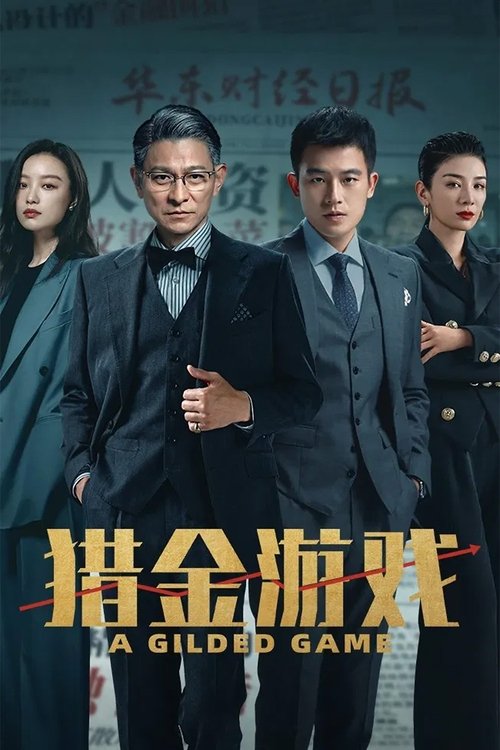
A Gilded Game
Plot
A gifted but underprivileged finance student, Gao Han, lands a rare internship at a top international investment bank, Bluestone, while helping his friend's family business prepare for a public listing. Surrounded by elite peers with powerful connections, Gao Han stands out for his integrity and raw talent. With the support of a seasoned mentor, he quickly adapts to the high-stakes world of investment banking, but soon discovers that success in this industry comes with hidden costs and fierce competition.
Get the Weekly Woke Watchlist
New and trending movies scored for woke bias, preachy messaging, and forced political themes — before you waste your evening.
No spam. One useful email per week.
Overall Series Review
Categorical Breakdown
The central struggle is based on class and meritocracy. The protagonist is an underprivileged student from an average working-class background who must overcome peers with powerful connections. The conflict focuses on integrity versus corruption, fitting the Universal Meritocracy framework. The film is a Chinese production, making issues of 'vilification of whiteness' or 'race-swapping' irrelevant.
The narrative critiques the cynicism and corruption of the investment banking system, which is explicitly likened to 'Wall Street of the East.' This is a specific critique of a corrupt financial *system* rather than an overall demonization of the home culture or ancestors. The moralistic ending, which ensures the corrupt are punished, suggests a pro-rule-of-law and ethical stance rather than civilizational self-hatred.
A high score is warranted due to the toxic and powerful female superior who serves as a primary antagonist. This 'Girl Boss' is portrayed as ruthless and cold. She uses her position to engage in sexual coercion against the male protagonist, explicitly reversing a common power dynamic. However, the protagonist also has a supportive, complementary girlfriend who sacrifices her own possessions to help his career, offering a positive, traditional female role, though she is marginalized in the plot.
The plot focuses entirely on high finance, corruption, and moral choice. There is no evidence in the plot summaries or reviews of alternative sexualities being centered, the deconstruction of the nuclear family, or the incorporation of gender ideology. The relationships presented are normative.
The core of the film is a moral drama: the protagonist must choose between ethical behavior (integrity) and corruption (ruthless success). A mentor figure represents honesty and good conscience. The story is structured around a clear distinction between moral right and wrong, directly opposing moral relativism. The film does not feature religion, but its commitment to objective ethical principles places it far from an anti-theistic stance.
Get the Weekly Woke Watchlist
New and trending movies scored for woke bias, preachy messaging, and forced political themes — before you waste your evening.
No spam. One useful email per week.