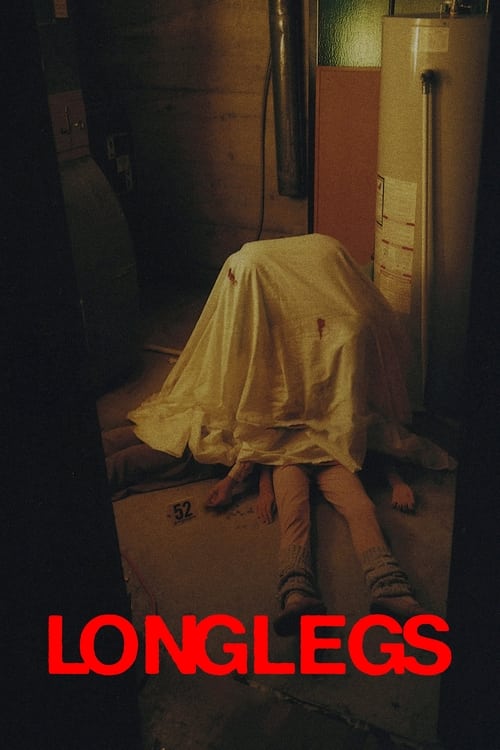
Longlegs
Plot
FBI Agent Lee Harker is a gifted new recruit assigned to the unsolved case of an elusive serial killer. As the case takes complex turns, unearthing evidence of the occult, Harker discovers a personal connection to the merciless killer and must race against time to stop him before he claims the lives of another innocent family.
Get the Weekly Woke Watchlist
New and trending movies scored for woke bias, preachy messaging, and forced political themes — before you waste your evening.
No spam. One useful email per week.
Overall Series Review
Categorical Breakdown
The narrative focuses on occult horror and trauma, not a race-based lecture. The main FBI agent, Harker, is a white female whose primary merit is her supernatural-like intuition or trauma-induced knowledge. Her immediate superior, a Black male agent, is depicted as needing the case's central ciphers and meaning explained to him in detail by the rookie Harker. The casting is colorblind outside of any plot focus.
The entire plot is dedicated to the annihilation of the traditional suburban nuclear family. The central antagonist, a Satanic agent, corrupts and exploits the institution of the family unit, using the pater familias to murder his wife and daughter. The violence is fueled by a religion-driven rejection of the maturing daughter as 'tainted,' showing the home and familial structure as fundamentally corruptible and a hell of living.
Agent Harker is a new recruit with a psychic 'gift' who instantly makes progress on a decades-old FBI cold case that baffled veterans. Her male boss is positioned as an exposition recipient who requires the case's meaning explained to him twice. The movie frames fathers as threatened by and unable to cope with their pre-pubescent daughters maturing, leading to the impulse for their murder. Motherhood is depicted only as a dark burden, a tool for evil, or an act of selfish sacrifice in the service of the devil's agent.
The narrative is focused on occult evil and generational trauma within the nuclear family. The film does not center or promote alternative sexualities or gender ideology. Some critics and audience members perceived the characterization of the androgynous serial killer as a negative trope, specifically accusing the film of 'transphobia,' which is the opposite of a pro-LGBTQ+ narrative.
The central evil is a self-proclaimed agent of the actual devil, a 'Hail Satan!'-shouting serial killer who operates within a context of occult power. The plot connects the violence to warped, religion-driven concepts of purity and original sin, implicitly critiquing fundamental Christian thought. The film operates in a 'godless context' where supernatural evil is real, yet traditional religion is entirely ineffective, with no one suggesting invoking the Almighty, and a priest is mentioned only as a victim.
Get the Weekly Woke Watchlist
New and trending movies scored for woke bias, preachy messaging, and forced political themes — before you waste your evening.
No spam. One useful email per week.