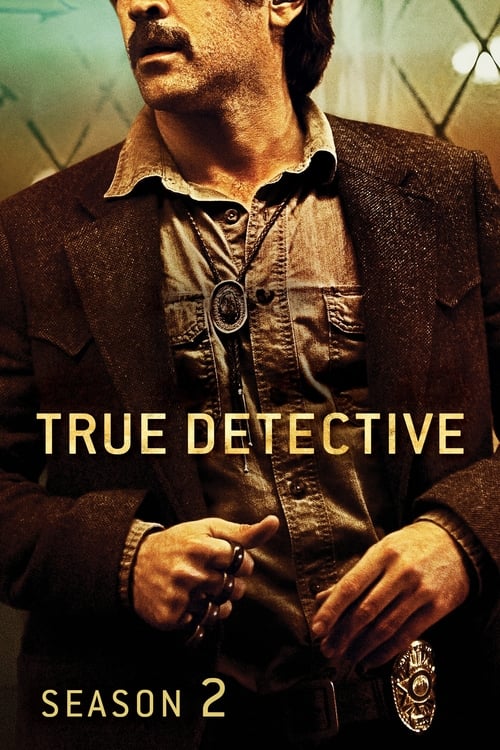
True Detective
Season 2 Analysis
Season Overview
A bizarre murder brings together three law-enforcement officers and a career criminal, each of whom must navigate a web of conspiracy and betrayal in the scorched landscapes of California.
Season Review
Categorical Breakdown
The plot focuses on a corrupt capitalist conspiracy involving rich, powerful white politicians, businessmen, and police officers. The villainy stems from financial greed and institutional power, not an immutable characteristic or identity-based hierarchy. The main characters are judged by their corruption or competence, regardless of their background. Vilification is directed at systemic rot, not race.
The central setting, the industrial city of Vinci, California, is depicted as a morally and physically poisoned landscape. The narrative is a profound condemnation of modern corporate and political corruption, framing the local government and its systems as fundamentally malignant and beyond redemption. The story suggests a complete failure of American civic institutions.
The female detective is a capable professional who carries knives, citing the fundamental difference between the sexes as the capacity for physical violence. This directly calls out the threat of men and frames the male characters as either corrupt and violent, or sexually and emotionally impotent. A prominent theme of male castration and failure is present, but the surviving female characters find hope in an escape that includes motherhood.
One of the lead male detectives is a closeted war veteran whose struggle with his repressed homosexuality forms a major source of his personal conflict and vulnerability. This identity is not centered as a virtue, but as a source of internal suffering that is cruelly exploited by the corrupt forces he investigates. The nuclear family unit is shown as a lost ideal for the male leads.
The worldview is steeped in existential nihilism and moral relativism, portraying the world as malignant and devoid of inherent meaning. The spiritual vacuum comes from profound secular and institutional corruption, not from the active demonization of traditional religion. The show focuses on the failure of human morality, not the failure of a specific faith.