The Intern
Plot
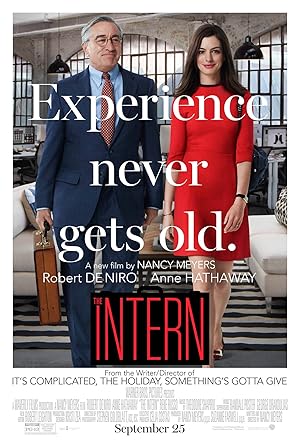
A retired 70-year-old widower, Ben (played by Robert De Niro), is bored with retired life. He applies to a be a senior intern at an online fashion retailer and gets the position. The founder of the company is Jules Ostin (Anne Hathaway), a tireless, driven, demanding, dynamic workaholic. Ben is made her intern, but this is a nominal role - she doesn't intend to give him work and it is just window dressing. However, Ben proves to be quite useful and, more than that, a source of support and wisdom.
Get the Weekly Woke Watchlist
New and trending movies scored for woke bias, preachy messaging, and forced political themes — before you waste your evening.
No spam. One useful email per week.
Overall Series Review
Categorical Breakdown
The central conflict is based on ageism and intergenerational dynamics, not race or intersectional hierarchy. The main characters are white, and the film does not engage in vilification of whiteness or white males; the lead male character (Ben) is a kind, honorable source of wisdom, and other characters are judged purely on their work ethic and personal character. Diversity is present in the workplace staff but is not a subject of political lecturing.
The narrative's core message is the preservation and application of traditional values and manners (represented by Ben's character) within a modern setting. The film frames Ben's ancestral home culture, professional experience, and respectful demeanor as a shield against the chaos of the startup environment. Institutions like work and family are viewed as important, and the wisdom of the past is explicitly shown to be beneficial.
The movie features a female CEO and founder (Jules), which aligns with the 'Girl Boss' trope. However, she is not a perfect Mary Sue, but a flawed, driven woman who struggles profoundly with self-doubt and the overwhelming pressure of balancing her career with her role as a mother and wife. The film's major conflict centers on her attempt to reconcile her career with her family life, which includes a stay-at-home husband who has an affair. The narrative frames motherhood and family as significant values that conflict with, but are ultimately essential to, her happiness, moving away from a purely anti-natalist message.
The narrative operates entirely within a normative structure. The central relationship conflicts and side romances involve traditional male-female pairings. There is no presence of alternative sexual ideology, deconstruction of the nuclear family beyond the stress of the career/stay-at-home father dynamic, or discussion of gender theory.
There is no overt hostility toward religion or Christian figures in the movie. The film operates on a principle of transcendent morality, exemplified by Ben's favorite quote that one is 'never wrong to do the right thing,' and the characters' moral choices serve as the climax. The overall tone is 'sweet,' 'sane,' and 'good-natured,' prioritizing genuine human connection and moral rightness.
Get the Weekly Woke Watchlist
New and trending movies scored for woke bias, preachy messaging, and forced political themes — before you waste your evening.
No spam. One useful email per week.