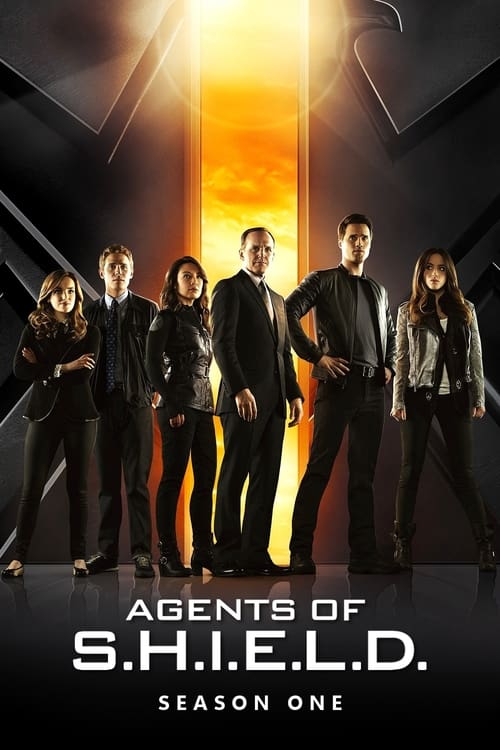
Marvel's Agents of S.H.I.E.L.D.
Season 1 Analysis
Season Overview
Season one begins where the “Marvel's The Avengers” left off. It's just after the battle of New York, and now that the existence of superheroes and aliens has become public knowledge, the world is trying to come to grips with this new reality. Agent Phil Coulson is back in action and now has his eye on a mysterious group called The Rising Tide. In order to track this unseen, unknown enemy, he has assembled a small, highly select group of Agents from the worldwide law-enforcement organization known as S.H.I.E.L.D.
Season Review
Categorical Breakdown
Characters are generally judged by competence, skill, and moral character. The cast is ethnically and gender-mixed without explicit identity-based narratives. The primary conflict is institutional (S.H.I.E.L.D. vs. Hydra), not an explicit critique of intersectional hierarchy or 'whiteness.'
The season's core plot involves the shocking revelation that the global-spanning Western institution of S.H.I.E.L.D. is corrupt at its foundation, having been infiltrated by the fascistic Hydra. This forces the protagonists to deconstruct and ultimately destroy their 'home' organization, presenting a significant civilizational self-doubt, although it is framed as a necessary purging of an internal, totalitarian enemy.
The main cast features strong female characters like Agent May and Agent Simmons who are defined by professional competence and respected for their distinct skills. May is 'The Cavalry,' a lethal combatant, and Simmons is a brilliant scientist. There is no explicit 'Mary Sue' trope, as all characters have flaws. The narrative avoids anti-natalist or anti-family messaging.
Alternative sexualities or gender ideology are not a factor in Season 1. The character relationships are heterosexual, with a focus on normative romantic tension and family themes that remain private and non-ideological.
The show is largely neutral on traditional religion, operating in a sci-fi/espionage framework. The moral conflict centers on objective concepts like loyalty, truth, and betrayal. Traditional religion or Christianity are not depicted as villains or the root of evil; the evil is a purely secular, militaristic organization (Hydra) and its global conspiracy.