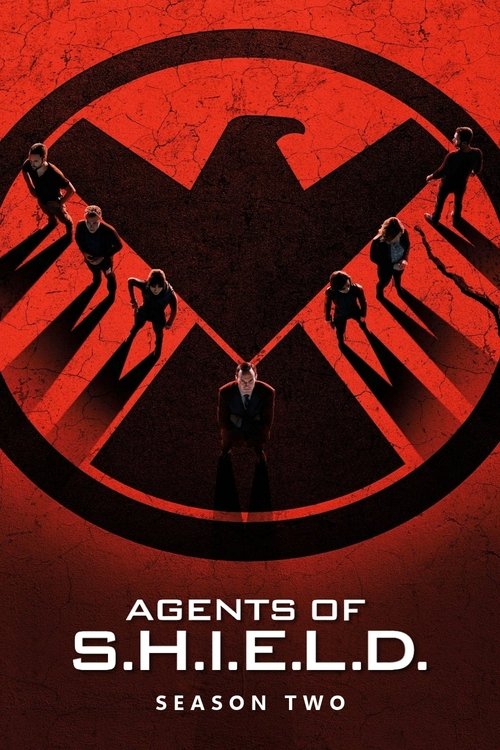
Marvel's Agents of S.H.I.E.L.D.
Season 2 Analysis
Season Overview
In the second season, Coulson and his team look to restore trust from the government and public following S.H.I.E.L.D.'s collapse.
Season Review
Categorical Breakdown
The main character's arc centers on discovering her mysterious, non-Caucasian parentage and her new, non-human identity and powers, an identity crisis that is the central plot engine. Characters are defined by their merit as agents, not their immutable characteristics. The season's primary antagonist is a highly capable and cold woman of color, the leader of the Inhumans, which counters the trope of vilifying white males or depicting them as incompetent.
The central premise involves the need to rebuild S.H.I.E.L.D. because the institution was rotten at its core, secretly infiltrated by the Nazi-derived organization Hydra from its inception. An entire subplot involves a rival S.H.I.E.L.D. faction forming to critique and dismantle the traditional organization, framing the old institution as fundamentally corrupt and too secretive. The theme is about dismantling and reforming the established 'home culture' institution.
Female characters like Agent May and Bobbi Morse are consistently portrayed as highly skilled, dominant, and capable combatants and leaders. The show presents women as strong and flawed right alongside their male counterparts. Male characters like Coulson and Fitz remain competent, with Fitz's arc focusing on his physical and mental vulnerability from trauma. The narrative does not treat motherhood as a prison or explicitly push an anti-natal message.
No main or recurring characters are established as openly LGBTQ+ in this season. The narrative structure is entirely normative and focuses on heterosexual relationships or professional dynamics. There is no element of centering alternative sexualities, deconstructing the nuclear family, or lecturing on gender theory.
The conflict is secular, dealing with espionage, technology, and alien biology (Inhumans). The plot does not feature any traditional religious characters or themes. There is no discernible hostility toward religion, specifically Christianity, and moral debates are framed around loyalty, duty, and human versus superhuman threats, not subjective power dynamics versus a higher moral law.