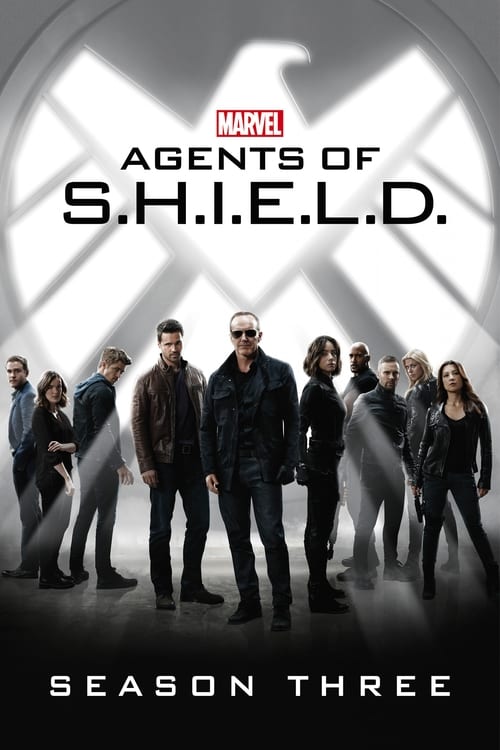
Marvel's Agents of S.H.I.E.L.D.
Season 3 Analysis
Season Overview
Many months after their war with a rogue group of Inhumans, the team is still reeling. Coulson is again trying to put the pieces of his once revered organization back together while also dealing with the loss of his hand. His confidante and second in command, Agent Melinda May, has yet to return from an impromptu vacation with ex-husband Andrew; deadly superspy Agent Bobbi Morse is recovering from her traumatic torture at the hands of Grant Ward; Fitz is obsessed with discovering the truth behind the mysterious disappearance of Simmons; and all are on high-alert for the next move from Ward and Hydra.
Season Review
Categorical Breakdown
The central conflict revolves around the systematic oppression and fear directed at the Inhumans, which functions as a direct analogy for marginalized groups facing societal prejudice and government control. Members of color outnumber white members on the core S.H.I.E.L.D. team in key roles, including two Chinese-American women (Daisy and May) and a Black man (Mack).
The ultimate villain, Hydra, is revealed to have been an ancient cult founded to worship an extraterrestrial/Inhuman parasite, Hive. This frames the primary evil as an ancient, alien-worshipping religion rather than a purely Western institutional or ideological failure, though the modern antagonist Gideon Malick perpetuates the cult. The heroic S.H.I.E.L.D. agency acts as a shield for humanity and its institutions.
Female characters are highly developed and critical to the plot, serving as co-leads, strategists, and top combatants. Daisy is the leader of the Secret Warriors and May is Coulson’s second-in-command. The male characters, like Coulson, Fitz, and Mack, are also competent and heroic, avoiding a blanket emasculation trope. The narrative celebrates female power and intellect without denigrating men.
The story arc of Inhumans being forced to hide or 'come out' with their new identities and powers is explicitly used as an analogy for the experience of coming out as gay in a non-accepting world. The theme of being misunderstood and fearing one's true nature is centered through this lens, and a minor supporting character mentions a breakup with his boyfriend due to his Inhuman status.
The ultimate source of all evil in the season, Hive, is the object of worship for a millennia-old cult that uses human sacrifice, retroactively making Hydra a fanatical religious organization. This positions a faith-based structure as the root of cosmic evil, contrasted against the scientific and rational morality of S.H.I.E.L.D..