Marvel's Agents of S.H.I.E.L.D.
Season 7 Analysis
Season Overview
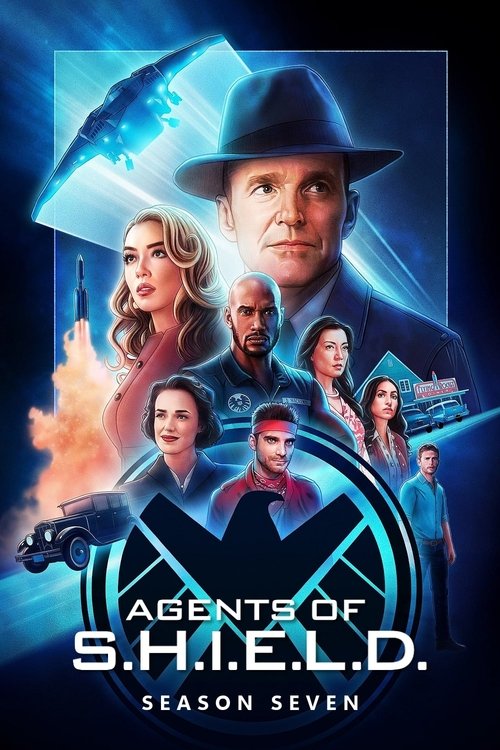
Coulson and the Agents of S.H.I.E.L.D. are thrust backward in time and stranded in 1931 New York City. With the all-new Zephyr set to time-jump at any moment, the team must hurry to find out exactly what happened. If they fail, it would mean disaster for the past, present and future of the world.
Season Review
Categorical Breakdown
The time-travel narrative is structured to force confrontations with historical prejudice, centering race and immutable characteristics over universal merit. A white character from the future delivers an expository dialogue about 'white privilege,' which is directly injected into the historical setting. The plot uses the past as a stage to lecture the audience on historical injustices, which detracts from pure character-driven storytelling.
The central mission is defending the existence of S.H.I.E.L.D., a Western institution, against an alien threat, which is a point against self-hatred. However, the travel through U.S. history is used to highlight the nation's past flaws like racism and sexism, framing the 'ancestors' time' as corrupt and bigoted. The emphasis is placed on critiquing the past, not celebrating it, which represents civilizational self-critique.
Female leads are consistently portrayed as immensely competent and highly skilled, fitting the 'Girl Boss' trope. The time-travel element contrasts the modern, perfect female agents with the perceived sexism of the past, often portraying historical males as bumbling or prejudiced. The hyper-competence of the women is a constant narrative element throughout the season. The show ends by affirming a major female character's choice of motherhood and career, which provides a measure of traditional balance.
The main cast relationships are traditional male-female pairings. The plot does not revolve around sexual identity or deconstructing the nuclear family, which is ultimately celebrated in the final scene. However, the season does include the explicit insertion of an overtly queer character, acknowledging the 'queer theory' lens as a form of representation.
The conflict is largely sci-fi, political, and technological, involving an alien race, the Chronicoms, and the shadow war against Hydra. Traditional religion is not a factor in the central struggle. The moral quest to save the timeline affirms an objective good, and there is no active vilification of religious faith or its adherents.