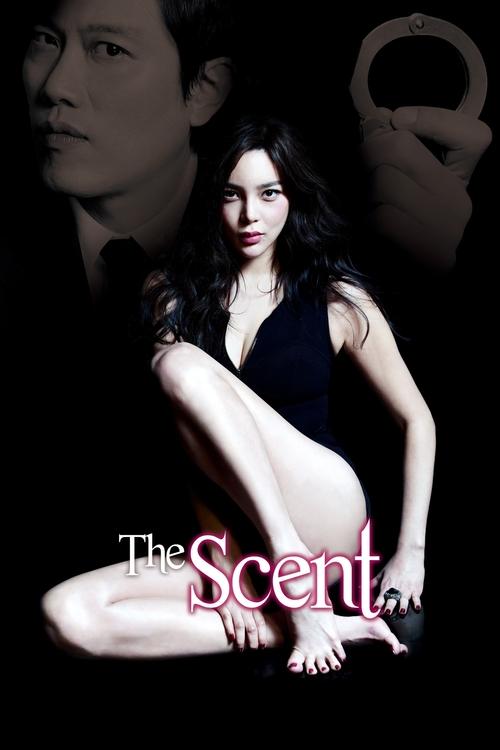
The Scent
Plot
A detective Seon-woo, who moonlights as a private investigator, has a beautiful new client Soo-Jin. The woman asks the detective to take photos of her husband in the midst of having an affair with another woman. When the detective goes to take pictures he discovers that the woman's husband is already dead. Now the detective becomes a suspect. The detective is chased by another detective Gil-ro. He must now set out for the real killer.
Get the Weekly Woke Watchlist
New and trending movies scored for woke bias, preachy messaging, and forced political themes — before you waste your evening.
No spam. One useful email per week.
Overall Series Review
Categorical Breakdown
The movie is a South Korean domestic crime thriller with a fully Korean cast, focusing on the character's moral failures, adultery, and the legal fallout of a murder case. The narrative does not utilize race or immutable characteristics to define an intersectional hierarchy or to lecture on privilege. Character actions and fate are dictated by their personal choices and involvement in the crime, aligning with universal meritocracy for good or ill.
The film does not express hostility toward South Korean civilization or ancestors. It is a crime story about personal moral failure (adultery and murder) and the criminal justice system. The plot details an internal crisis of fidelity and law, but it does not frame the Korean home culture as fundamentally corrupt or racist. The film’s focus is on thriller and dark comedy elements.
The core plot is driven by a seductive and manipulative *femme fatale* character who is ultimately responsible for the conflict and the male lead's downfall. This showcases a form of destructive female agency and power over men, who are depicted as flawed, easily seduced, and incompetent when caught in her web. The female character is highly capable and cunning, but the story does not contain typical 'Girl Boss' tropes or explicit anti-natalist messaging. This dynamic pushes the score toward the mid-range by depicting a female character who dominates the narrative through sexual power and manipulation.
The narrative is completely focused on heterosexual infidelity, sex, and murder within the context of marriage and adultery law. There is no presence of alternative sexualities being centered, nor is there any deconstruction of the nuclear family beyond the inherent drama of divorce and cheating. The film operates entirely within a normative structure, not a queer theory lens.
The film is a secular crime thriller that deals with themes of morality (adultery, murder) through the lens of a police and private investigation. Traditional religion is not featured, critiqued, or demonized in the plot. The story's conflicts are resolved by the pursuit of criminal truth and law enforcement, not a rejection of transcendent morality or a push for moral relativism through philosophical lecturing.
Get the Weekly Woke Watchlist
New and trending movies scored for woke bias, preachy messaging, and forced political themes — before you waste your evening.
No spam. One useful email per week.