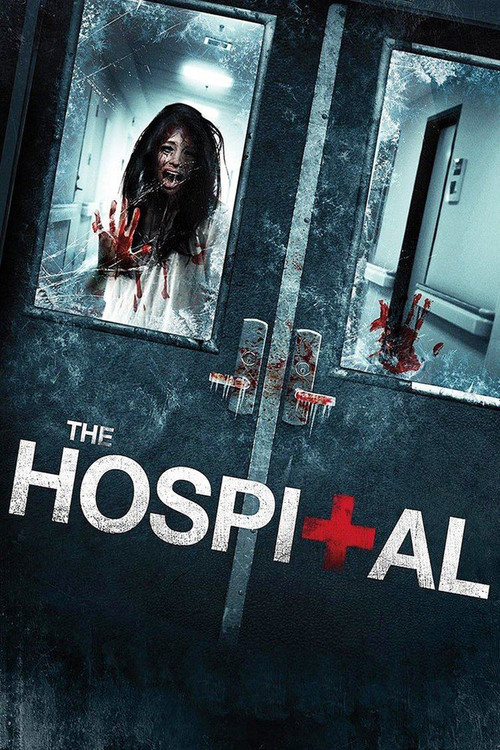
The Hospital
Plot
Old St. Leopold's Hospital has many urban legends surrounding it, but the residents of Bridgeport all agree on one thing: tortured souls roam its abandoned halls. The mystery proves too much for a pretty young student who decides to investigate for her senior class project. Unfortunately, she does not find ghosts. She, instead, finds Stanley... serial rapist, murderer, and psychopath. As the young girl becomes Stanley's new pet, a team of young investigators descend on the hospital to "hunt some ghosts." Stanley sees nothing but fun and games in his future. But, what Stanley does not know is that the hospital truly is haunted and the restless spirits there are not happy with what he has been doing.
Get the Weekly Woke Watchlist
New and trending movies scored for woke bias, preachy messaging, and forced political themes — before you waste your evening.
No spam. One useful email per week.
Overall Series Review
Categorical Breakdown
The plot centers on a purely evil individual (a serial rapist and murderer) and his victims. The conflict is based on individual psychopathy and supernatural justice, with no focus on race, intersectional hierarchy, or political lectures about privilege or systemic oppression.
The abandoned hospital serves as a generic, ominous setting for a local horror tale. The narrative does not critique Western civilization, institutions, or ancestral heritage, but rather uses the setting as a container for human and supernatural evil.
The main female character is immediately cast as a victim, taken captive and brutalized by the male villain. The film was criticized as being 'misogynist' in its portrayal of gender dynamics, which is the direct opposite of the 'Girl Boss' or 'Mary Sue' trope and lacks any message of female empowerment or male emasculation.
The story does not incorporate themes of sexual ideology, alternative sexualities, or queer theory. The central antagonist's depravity is purely criminal and psychopathic, without any focus on centering non-normative sexual or gender identities.
The core of the movie relies on the existence of 'tortured souls' and 'restless spirits' who enforce a moral law by punishing the human villain. This supernatural framework acknowledges objective moral consequence and spiritual reality, countering moral relativism.
Get the Weekly Woke Watchlist
New and trending movies scored for woke bias, preachy messaging, and forced political themes — before you waste your evening.
No spam. One useful email per week.