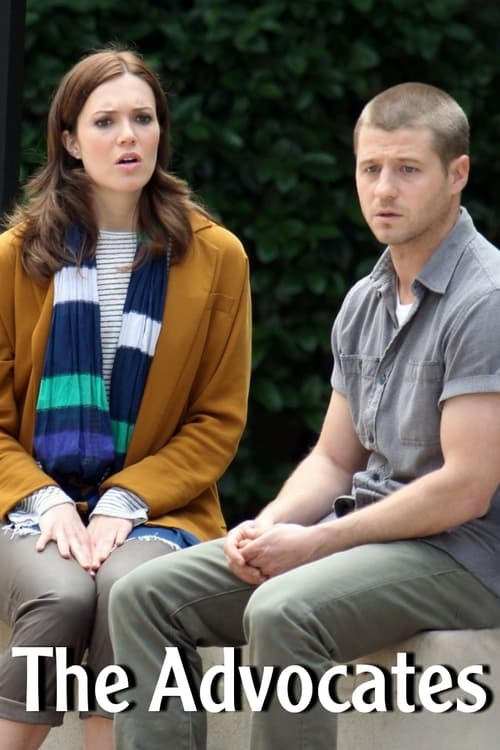
The Advocates
Plot
Revolves around a female lawyer and a male ex-con who team as victim advocates and go to the edge of the law to right wrongs and fight for the underdog.
Get the Weekly Woke Watchlist
New and trending movies scored for woke bias, preachy messaging, and forced political themes — before you waste your evening.
No spam. One useful email per week.
Overall Series Review
Categorical Breakdown
The plot's conflict is driven by the failure of the established legal system to protect the 'underdog,' framing the problem as an institutional one, not an explicitly race-based or intersectional hierarchy. Character roles are determined by professional and criminal history (lawyer vs. ex-con), aligning with merit and circumstance rather than immutable characteristics. The casting appears to be genuinely colorblind without political lecturing on privilege.
The narrative requires the heroes to operate 'on the edge of the law' to 'right wrongs,' suggesting the current legal system and its institutions are flawed or corrupt. This demonstrates institutional distrust, but it is a critique of a single, functioning system (law) and not a wholesale demonization of Western civilization, home culture, or ancestors.
Shannon Carter is established as a 'no-nonsense lawyer' and a former 'take-no-prisoners Assistant District Attorney,' portraying her as highly competent and morally guided. Her partner, Henry Bird, is a male 'ex-con' who is the rule-breaking operative. This dynamic establishes the female lead as the professional, moral, and intellectual authority, while the male lead is the morally compromised subordinate, a classic 'Girl Boss' trope that inverts and diminishes the male's authority and competence.
The core plot is focused entirely on the secular pursuit of justice for victims and the failings of the legal system. There is no evidence in the concept or available details that the narrative centers alternative sexualities, deconstructs the nuclear family, or engages in gender ideology lecturing.
The conflict is resolved through the characters' secular, ethical conviction to pursue justice outside of official legal channels. Morality is objective—victims deserve justice—but this justice is framed in purely secular and humanist terms (a 'higher moral law' outside of man's law), not as a critique or defense of traditional religion. There is no hostility toward faith or a vacuum of moral relativism.
Get the Weekly Woke Watchlist
New and trending movies scored for woke bias, preachy messaging, and forced political themes — before you waste your evening.
No spam. One useful email per week.