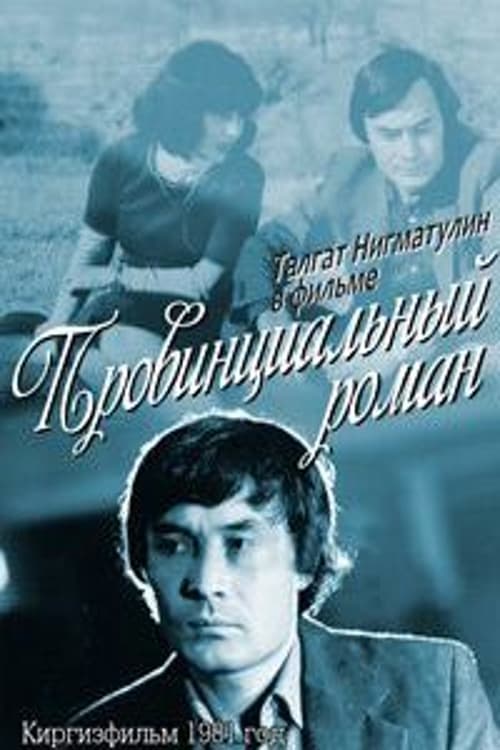
A Provincial Romance
Plot
Get the Weekly Woke Watchlist
New and trending movies scored for woke bias, preachy messaging, and forced political themes — before you waste your evening.
No spam. One useful email per week.
Overall Series Review
Categorical Breakdown
The film centers on individual responsibility and legal tragedy rather than immutable characteristics. Casting is ethnically authentic to the Central Asian setting, reflecting genuine regional representation. The plot contains no vilification of 'whiteness' or forced diversity, focusing instead on character merit and moral choice.
The narrative's critique is focused on individual moral failings and the complex pressure of the Soviet social and legal system. It is an internal dramatic critique of the home culture. It does not display hostility toward Western civilization, demonize ancestors, or depict external cultures as morally superior to a Western home.
The core dynamic is a tragedy rooted in a traditional male-female relationship. The female lead's actions are driven by complex social and family pressure, not a 'Mary Sue' or 'Girl Boss' trope. Motherhood is introduced as the vital factor that ultimately compels the woman toward seeking a resolution and justice, directly contradicting anti-natalist messaging.
The entire dramatic structure is built around the consequences of a traditional male-female pairing, including adultery, legal action, and the birth of a child. There is no presence of alternative sexualities, centering of sexual identity, or deconstruction of the nuclear family unit or gender ideology.
Despite being a product of the officially anti-religious Soviet system, the film's explicit theme is the profound problem of moral responsibility for one's actions before society and oneself. This emphasis on objective accountability and consequences moves the narrative away from moral relativism and a subjective 'power dynamics' view of morality.
Get the Weekly Woke Watchlist
New and trending movies scored for woke bias, preachy messaging, and forced political themes — before you waste your evening.
No spam. One useful email per week.