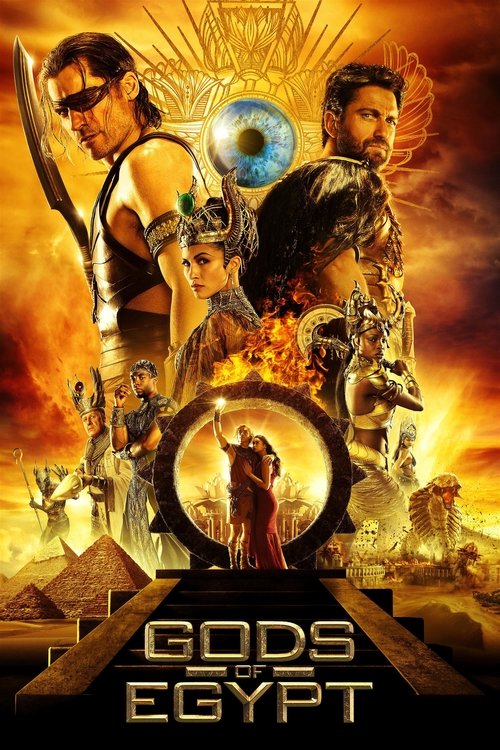
Gods of Egypt
Plot
A common thief joins a mythical god on a quest through Egypt.
Get the Weekly Woke Watchlist
New and trending movies scored for woke bias, preachy messaging, and forced political themes — before you waste your evening.
No spam. One useful email per week.
Overall Series Review
Categorical Breakdown
The movie does not contain any internal narrative lecturing on privilege, systemic oppression, or the vilification of whiteness. It became the subject of controversy for its casting of predominantly white actors in Egyptian roles, which constitutes historical race-swapping in the reverse direction of the 'woke' ideal. The narrative judges characters based on a universal good-versus-evil conflict.
The film is a mythological fantasy set entirely within an imagined version of Ancient Egypt. The narrative is disconnected from Western civilization, its history, or its culture. The plot centers on an internal struggle for control of the Egyptian kingdom, offering no critique of the West or its ancestors.
Female characters like Zaya function primarily as the 'damsel in distress' or motivation for the male hero's quest. Hathor, the Goddess of Love, is portrayed with a heavy emphasis on overt sexuality rather than her domains of fertility and motherhood. The film relies on traditional objectification tropes, which contrasts sharply with the 'Girl Boss' or anti-natalism agenda.
The core romance is a traditional male-female pairing between the mortal characters Bek and Zaya, which adheres to a normative structure. The plot does not center on alternative sexualities, gender deconstruction, or gender ideology. Sexual content revolves around the heterosexual relationships of the gods and mortals.
The film depicts a polytheistic pagan system where the gods are flawed, self-interested, and fallible super-beings who can be killed. This presentation is a critique of the pagan gods' nature, not a targeted attack on Christianity. The narrative ultimately promotes a transcendent morality where the main god character must learn responsibility, courage, and sacrifice to prove his worth as a ruler.
Get the Weekly Woke Watchlist
New and trending movies scored for woke bias, preachy messaging, and forced political themes — before you waste your evening.
No spam. One useful email per week.