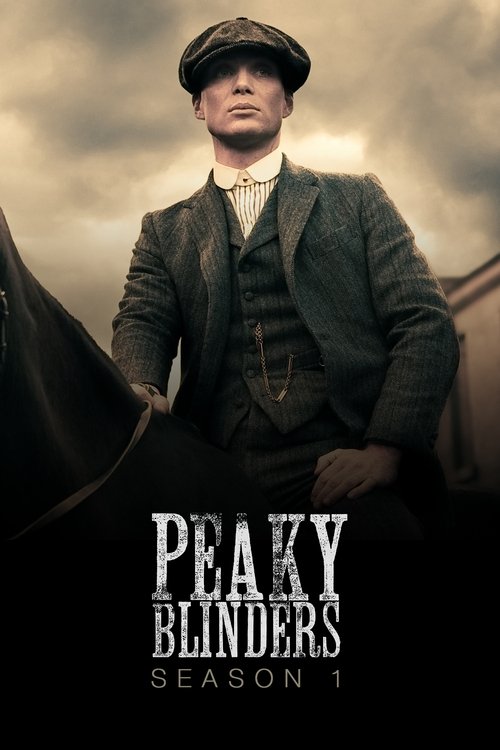
Peaky Blinders
Season 1 Analysis
Season Overview
No specific overview for this season.
Season Review
Categorical Breakdown
The core conflict is between the working-class Shelby family, who are of Irish Traveller and Romani descent, and the corrupt British establishment (police/government) represented by Chief Inspector Campbell. The family's 'Gypsy' heritage is an immutable characteristic that positions them as outsiders fighting the Anglo-British power structure. The casting is mostly authentic to the period and location, though some commentary notes the inclusion of a black war comrade, Jeremiah, in the gang is anachronistic for the time.
The institutions of Western civilization are overwhelmingly portrayed as corrupt and destructive. The British government is represented by Inspector Campbell and Winston Churchill as ruthless, cynical antagonists trying to suppress the working-class people of Birmingham. The world is shown as a morally bankrupt, post-WWI landscape where the only sanctuary is the family and the local gang. This narrative demonstrates hostility toward the centralized, established home culture, even though the Shelbys seek to dominate it rather than leave it.
Female characters hold significant power within the Peaky Blinders organization. Aunt Polly is the family treasurer and a fierce, capable strategist, famously reminding Tommy that 'this whole bloody enterprise was women's business while you boys were away at war.' Grace Burgess is introduced as an intelligent, quick-witted, and highly competent spy. While operating in a patriarchal world, the main women are consistently depicted as superior in common sense and financial acuity, which elevates the 'Girl Boss' trope without fully emasculating the protagonist.
The narrative focuses on traditional heterosexual relationships, family dynamics, and the pursuit of power through violence and business. The characters' sexuality is a private matter tied to their emotional relationships or their profession, as seen with Lizzie Stark. There is no presence of alternative sexual ideologies, deconstruction of the nuclear family, or lecturing on gender theory.
The series' moral center is a vacuum: the protagonist, Tommy Shelby, is a trauma-scarred war veteran who explicitly rejects traditional faith and God, viewing the world through a purely pragmatic and nihilistic lens. The most religious member of the family, Aunt Polly, is a criminal who prays and commits violence. The main antagonist, Inspector Campbell, claims a righteous mission but is hypocritical, ruthless, and sadistic, framing the state's oppressive authority as corrupted 'Christian' justice.