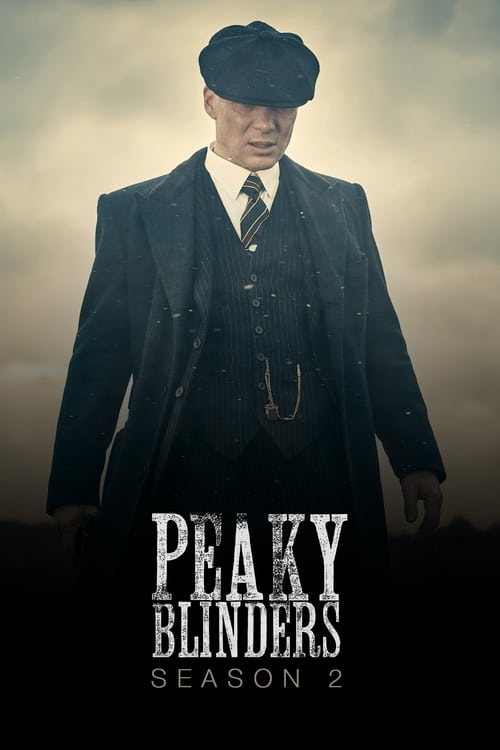
Peaky Blinders
Season 2 Analysis
Season Overview
As the 1920s begin to roar, business is booming for the Peaky Blinders gang. Shelby sets his sights on wider horizons and his meteoric rise brings him into contact with both the upper echelons of society and astonishing new adversaries from London’s criminal world. All will test him to the core, though in very different ways. Meanwhile, Shelby’s home turf faces new challenges as an enemy from his past returns to the city with plans for a revenge of biblical proportions.
Season Review
Categorical Breakdown
The Shelby family's mixed Irish Traveller and Romani background is a constant source of prejudice and frames their ambition as an upward class struggle against the British aristocracy. The conflict is based on a class and ethnic minority group of criminals challenging the established 'white' power structure, which is depicted as hypocritical and corrupt.
The institutions of Western civilization, specifically the British government, aristocracy, and police force, are portrayed as being more profoundly corrupt and manipulative than the criminal gang. The main antagonist works for Winston Churchill, using the gang for political assassination and manipulation, suggesting that the top of society is 'worse than' the street criminals. The entire premise is a hostile deconstruction of the British post-WWI system.
Female characters like Polly Gray and Ada Thorne are central figures in the family's business and political machinations and are shown to be highly competent and strong. Polly’s arc focuses on reclaiming her lost son and enacting revenge for the sexual exploitation she endures, tying her strength to the preservation of her family. Women are not depicted as instantly perfect but as hardened survivors whose power emerges from a grim context, which is not a simple 'Girl Boss' trope.
The season focuses entirely on heterosexual relationships and family dynamics, including an arc where a character seeks fertility treatment and another becomes pregnant. There is no presence of alternative sexual ideologies, centering of LGBTQ+ characters, or discussion of gender theory.
The protagonist, Tommy Shelby, is explicitly nihilistic and rejects faith, attributing events to luck or curses rather than a moral God. The primary villain, Major Campbell, is a man of strong moralistic and religious posturing who is revealed to be a hypocritical, depraved predator and sexual assailant. This narrative device directly connects institutional religion and morality to corruption and evil, framing morality as subjective 'power dynamics.'