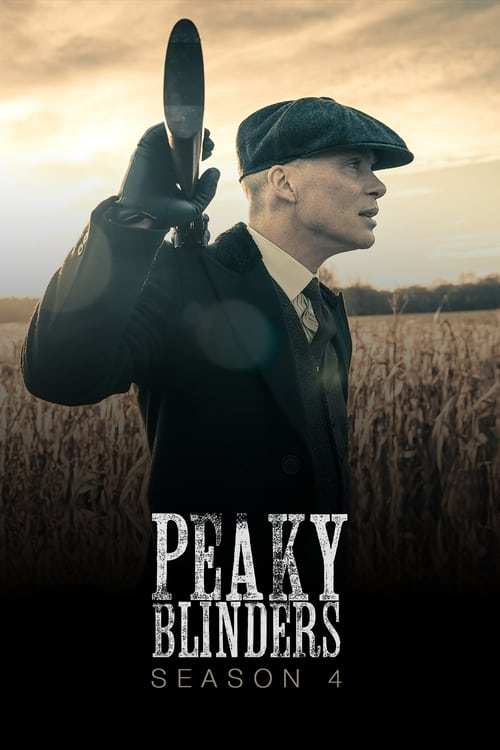
Peaky Blinders
Season 4 Analysis
Season Overview
In Christmas 1925, the Shelby family receives a mysterious letter, and Tommy understands they are all in danger. Luca Changretta comes from New York to avenge his father's death. The Shelby family gathers in Small Heath, in Birmingham. All of them will have to put aside their dispute in order to fight together for their survival.
Season Review
Categorical Breakdown
The core conflict is a territorial, old-world ethnic gang war between the Irish/Romani Shelbys and the Italian-American Mafia, relying on merit (cunning, violence) rather than immutable characteristic hierarchy. The introduction of Jessie Eden brings class-based politics, but the narrative co-opts her radical unionist/Communist agenda, reducing her to a political asset and romantic interest for the white male protagonist.
The central action is the Shelby family abandoning their country estates to return to Small Heath and defend their home and ancestral territory against an external Italian-American threat. The theme is the defense of the clan/family institution against chaos. Tommy’s arc culminates in him accepting an OBE and becoming a Labour Member of Parliament, engaging with the national structure rather than demonizing all Western civilizational institutions.
Key female characters like Polly, Linda, and Esme are complex and influential, but their portrayal is defined by profound trauma, instability, and flawed, consequential decisions. Polly struggles with her mental state and makes catastrophic misjudgments; Linda descends into the family's vice to cope. This grounds the female roles in realistic struggle, preventing them from becoming flawless 'Girl Boss' figures. The plot also uses the powerful historical character Jessie Eden primarily to advance the male protagonist's political ambitions.
The season is overwhelmingly focused on the survival of the criminal Shelby nuclear/extended family. The main romantic and sexual relationships are exclusively heterosexual. There are no prominent LGBTQ+ characters, thematic centering of alternative sexualities, or narrative efforts to deconstruct the nuclear family structure or promote gender ideology.
The score is not a 1 because the show is fundamentally set in a world of objective moral relativism where the Church and traditional faith (represented by Linda's pious Quakerism) are often shown as naive, restrictive, or incompatible with the ruthless reality of the era. However, faith is not the root of evil, and the main villains (Changretta and the Mafia) are purely secular-criminal. The morality is driven by personal ambition and code, not an explicit lecture against the transcendent.