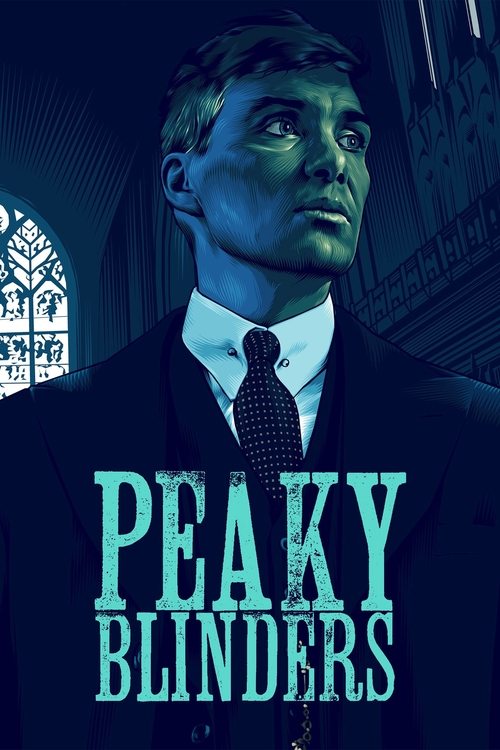
Peaky Blinders
Season 6 Analysis
Season Overview
1934 brings both opportunities and dangers to the Peaky Blinders. Beset by demons old and new, Tommy Shelby conceives a radical strategy to deal with a world on the road to hell, continuing his war against fascist politician Oswald Mosley and crossing paths with a mysterious new character.
Season Review
Categorical Breakdown
The narrative explicitly frames the conflict around identity and heritage. The Shelby family's Romany (Gypsy) and half-Jewish heritage is a crucial plot point that places them in direct opposition to the pure evil of the white, aristocratic British Fascist antagonists, Oswald Mosley and Diana Mitford. A key scene involves a matriarch defending her mixed-race baby from her racist son, citing their Romany and Jewish blood. The central moral struggle of the season is against a privileged white elite weaponizing racial identity, which is strongly vilified.
The hostility is primarily directed toward the corruption of power, not the civilization itself. The principal villain is British Fascism, which is shown as a threat to Britain rather than an inevitable conclusion of its culture. Tommy's ultimate personal arc is a retreat to his Romany heritage and the open road, which is a rejection of industrial, establishment life, but the institutions of family and loyalty are still respected as protective against chaos.
Female characters take on significant leadership roles, running the family business competently while the men struggle with drug addiction, grief, and mental collapse. The final act for a primary female lead is an empowering departure from the marriage, which involves taking her surviving child and rejecting the toxic family life as a destructive, life-threatening environment. This frames the traditional family structure under the male lead as a form of suffering for the mother.
No significant characters, storylines, or explicit thematic commentary related to alternative sexualities or gender ideology are central to the plot. The season maintains a normative structure regarding relationships and family.
There is no overt hostility toward Christianity or traditional religion. Instead, the season replaces a reliance on Christian faith with a deep focus on Romany spiritual beliefs, curses, and a non-Christian concept of fate and redemption. Tommy's moral struggle is internal and transcendent, which acknowledges a higher moral law, even if it is channeled through a folk-spiritual lens rather than a Western institutional one.