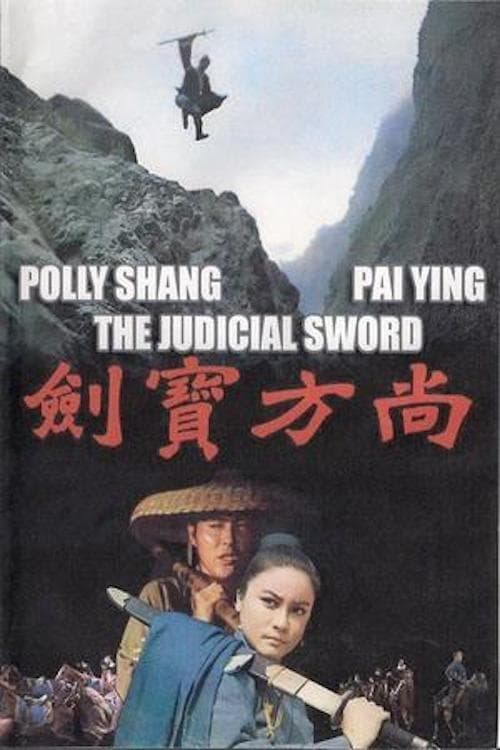
Judicial Sword
Plot
This rare swordplay team with top kung fu starlet Polly Shang Kwan and Pai Ying are on a mission to escort an official across a particularly treacherous and dangerous valley.
Get the Weekly Woke Watchlist
New and trending movies scored for woke bias, preachy messaging, and forced political themes — before you waste your evening.
No spam. One useful email per week.
Overall Series Review
Categorical Breakdown
Characters are judged by their martial skill, loyalty, and dedication to their mission, representing universal meritocracy. The casting is historically authentic to the Chinese setting, with no forced insertion of diversity or vilification of any specific ethnic group. The narrative focuses on the conflict between good and evil, not systemic oppression.
The Wuxia genre inherently celebrates the traditional Chinese martial code and its values of honor, justice, and loyalty. The heroes strive to uphold a moral order, which is an affirmation of their civilization and heritage, not a deconstruction of it. The institutions of justice and the ancestral code are viewed as necessary for stability.
The female lead, played by a top kung fu star, is a fully capable martial artist who shares the starring and fighting duties equally with the male lead. Her competence is established through rigorous skill, not instant perfection or magic power. The male characters are protective and capable partners. The narrative avoids anti-natal or anti-family messaging, focusing instead on shared heroism and duty.
The focus of the film is on action, honor, and a traditional adventure narrative, with no presence of alternative sexual or gender ideologies. The structure is entirely normative, centering on the male-female partnership as colleagues in arms, with sexuality remaining private and incidental to the main plot.
The movie operates within the traditional moral framework of the Wuxia genre, which is heavily influenced by Confucian and sometimes Buddhist/Taoist principles that uphold a high moral law. The central quest is for justice and the upholding of an objective moral code against villainy. Faith, honor, and objective truth serve as the foundation for the heroic actions.
Get the Weekly Woke Watchlist
New and trending movies scored for woke bias, preachy messaging, and forced political themes — before you waste your evening.
No spam. One useful email per week.