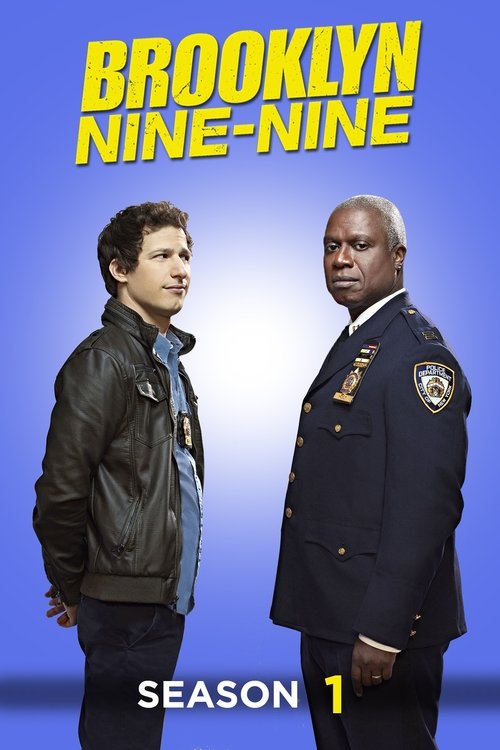
Brooklyn Nine-Nine
Season 1 Analysis
Season Overview
Talented but laid-back detective Jake Peralta and his dysfunctional peers struggle to get along under their precinct's strict new captain.
Season Review
Categorical Breakdown
The main cast is intentionally diverse, featuring a Black gay captain, two Latina detectives, and a Black sergeant. The most incompetent characters, Hitchcock and Scully, are two white males, providing comic relief through their grossness and laziness. Captain Holt's backstory includes specific mention of his career being hampered by racial and sexual discrimination within the police force. However, the protagonist, Jake Peralta, is a white male who is presented as a detective prodigy and the hero of the show, tempering the 'vilification of whiteness' trope.
The precinct itself is portrayed as a loving, if highly dysfunctional, second family and a functional institution of law enforcement. There is a palpable sense of loyalty among the police officers, even the corrupt ones, and Sergeant Jeffords' arc involves him overcoming trauma to return to active duty to protect his community. The narrative does not frame American culture, Western civilization, or the police institution as fundamentally corrupt or racist.
Female characters hold prominent roles and are consistently depicted as superior to their male counterparts in key areas. Detective Amy Santiago is a highly competent, ambitious, and decorated detective who is often more effective than the male lead. Detective Rosa Diaz is the tough, intimidating, physically capable 'cool guy' archetype. Gina Linetti operates as an alpha-female civilian who holds intellectual and emotional power over the male detectives. The primary male protagonist, Jake Peralta, is introduced as a man-child who must be mentored by his female colleague and his emotionally stoic captain.
Captain Raymond Holt is the precinct's commanding officer, an openly gay Black man who is a positive authority figure and successful professional. His marriage to his husband, Kevin Cozner, is introduced as a stable, loving, and established nuclear structure, normalizing the homosexual relationship. The character’s sexuality is a component of his identity and a source of past struggle in the NYPD, but it is not the dominant feature of his plotlines or a continuous subject of didactic commentary.
Religion is largely absent from the narrative focus of Season 1. The morality of the show is centered on a clear good-vs-evil dynamic based on law enforcement's mission to solve crimes and help victims. The characters are governed by an objective, transcendent moral law related to justice and duty, rather than embracing moral relativism.