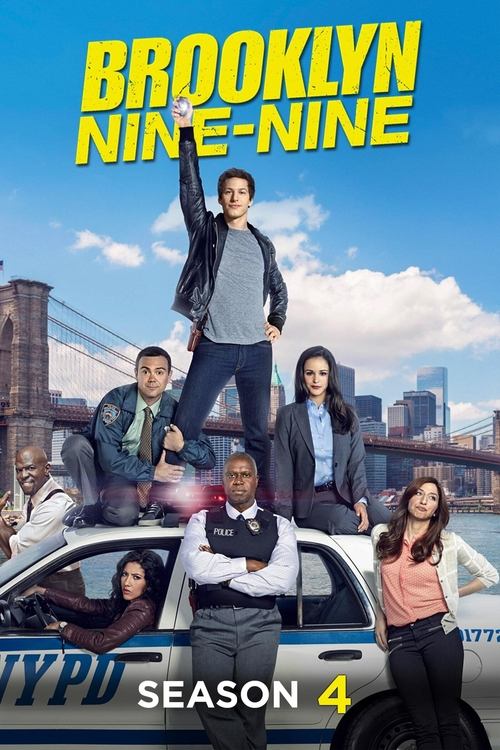
Brooklyn Nine-Nine
Season 4 Analysis
Season Overview
While the Nine-Nine tries to keep a lid on things in Brooklyn, Jake and Holt are in a witness protection program in Florida, where Holt is thriving.
Season Review
Categorical Breakdown
A central episode focuses entirely on Sergeant Terry Jeffords, a black man and police officer, being racially profiled and harassed by a white officer while off-duty in his own neighborhood. This is presented as an example of systemic oppression, which is debated by Holt and Terry concerning how to best fight it within the police system. The white officer is portrayed as unapologetically bigoted and incompetent, unable to grasp the issue beyond not knowing Terry was a fellow cop. This places the narrative squarely on a lecture about systemic oppression and racial hierarchy.
The show does not condemn American or Western civilization entirely. Instead, the narrative, particularly the plot point regarding racial profiling, critiques a specific institution (the NYPD) and calls for its reform, portraying the protagonists as dedicated officers who believe in institutional justice. There is no deconstruction of heritage or framing of the home culture as fundamentally corrupt, only a desire to fix a specific failing.
Female characters are highly capable and driven, often surpassing the male leads in competence. Amy Santiago is a hyper-competent detective, and the women of the squad demonstrate strong mutual support, including an episode dedicated to female-focused self-improvement. Terry Jeffords states explicitly that he is a feminist, and his character is subverted to be physically imposing yet emotionally sensitive. Male characters like Jake Peralta are generally depicted as immature, and Charles Boyle is excessively eccentric, placing the women in a superior, 'Girl Boss' framing, though motherhood is also featured as a complex topic with Gina's pregnancy and Boyle's adoption.
Captain Raymond Holt is an openly gay black man who is the captain and a primary mentor figure, normalizing his identity and featuring his past struggles with discrimination as a motivator for his current actions. His identity, while present, is not the sole focus of his character. Since a major character's coming out arc happens in the subsequent season, the score is moderate, reflecting the established and accepted presence of a high-ranking gay character without the intense focus on gender theory or a 'coming out' plot that would push the score higher in this specific season.
There are no plots or running gags that target religious faith, specifically Christianity. The moral compass of the characters revolves around secular concepts of police duty, friendship, and justice. The narrative operates within a framework that implicitly acknowledges objective moral choices (filing the complaint against the racist cop being the 'right' thing to do), not a moral relativist vacuum.