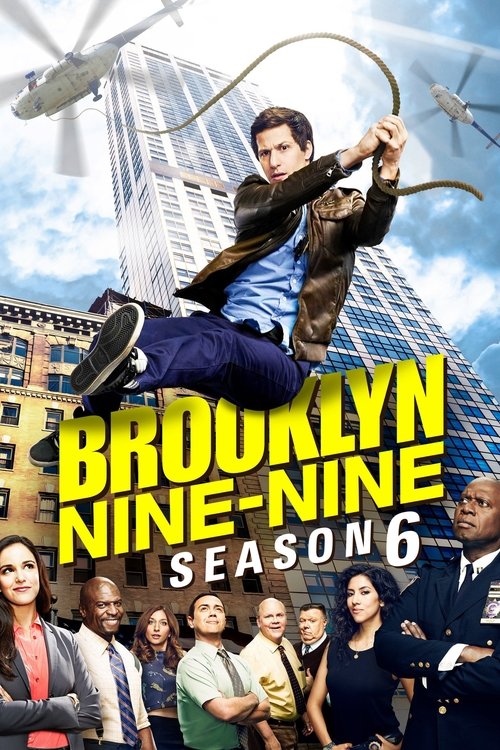
Brooklyn Nine-Nine
Season 6 Analysis
Season Overview
As Jake and Amy adjust to married life and Holt squares off with a rival, the hijinks, heists and crime-fighting continue at the Nine-Nine.
Season Review
Categorical Breakdown
The main plot centers on the diverse ensemble—led by the Black, gay Captain Holt—conspiring to take down the corrupt white male NYPD Commissioner who enforces 'regressive policies' and uses illegal wiretaps. The narrative consistently frames the primary conflict as the diverse, good individuals fighting a fundamentally unjust and corrupt white-male-led establishment.
The central conflict involves the heroic characters fighting the corrupt upper echelons of the NYPD, a key civilizational institution. The narrative repeatedly depicts the institution as enforcing a 'fundamentally unjust status quo' and suggests 'this world is terrible' after the corrupt Commissioner avoids arrest, framing the system itself as broken and in need of radical deconstruction by the internal heroes.
A dedicated episode ('He Said, She Said') is essentially a dramatic lecture on systemic sexism and the pervasive threat of sexual harassment in the workplace. The story is centered on the female detective's fight against the 'patriarchy' and her own past trauma. The male lead is instantly positioned as a supportive ally whose primary role is to educate himself on feminism via a documentary, reinforcing the trope of the enlightened female lead and the learning-male partner. The debate over children, while ending pro-natal, spends significant time prioritizing the female character's individual fulfillment versus traditional family roles.
The season contains a storyline focused on Rosa Diaz's relationship with a new girlfriend and features the show's 'first LGTQIA+ kiss.' One of the precinct's main authority figures, Captain Holt, is an established gay, Black man. While the characters' sexual identities are not their only traits, their continuous, celebratory presence moves the show significantly away from the 1/10 'Normative Structure' as alternative sexualities are regularly centered and normalized.
There is no explicit storyline or dialogue attacking or criticizing organized religion, specifically Christianity. The show's moral framework is entirely secular, focused on social and political justice themes (systemic corruption, sexism), rather than engaging with or showing hostility toward any form of transcendent or traditional faith.