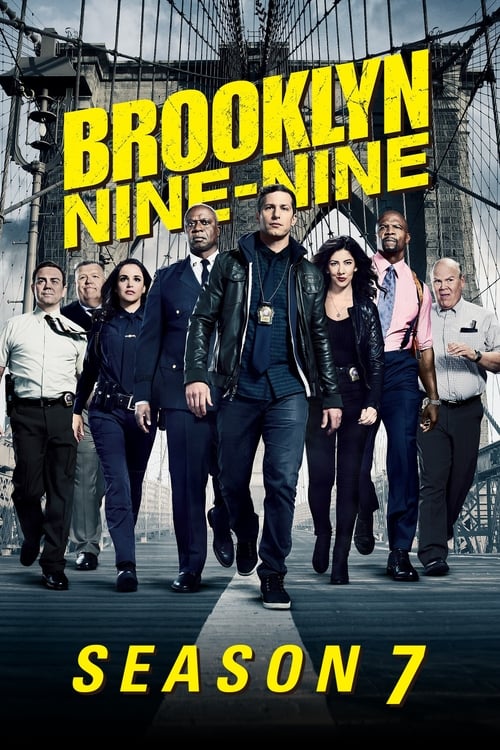
Brooklyn Nine-Nine
Season 7 Analysis
Season Overview
Jake and Amy rethink their family plans, Holt chafes over his demotion, and the squad sees the return of old pals and nemeses amid the usual shenanigans.
Season Review
Categorical Breakdown
The narrative frequently centers on immutable characteristics, focusing on Captain Holt’s experience with racism and homophobia in the force and the general struggles of the diverse ensemble against systemic oppression. Jake Peralta, a white male, is positioned as a 'feminist ally' who must acknowledge his privilege and apologize for the actions of 'men,' which functions as a soft vilification of 'whiteness' and male identity. One plot involves detectives subverting official protocol to protect an undocumented immigrant from federal law enforcement, depicting an established institution as an oppressive force.
The precinct itself is generally portrayed as a family and a shield against chaos in New York City, which is a positive framing of a local institution. However, the show consistently critiques the larger NYPD structure and law enforcement in general as deeply flawed, racist, and homophobic, framing a key Western institution as fundamentally corrupt. This targets systemic issues rather than demonizing all ancestors or the nation, resulting in a moderate score.
The season is heavy on 'feminist ally' messaging, with male characters like Jake taking a supportive and often subservient role to Amy's career ambitions, consistent with the 'emasculation of males' trope. The 'Girl Boss' narrative is strong, as Amy is a hyper-competent, goal-driven Latina officer. However, the entire season builds to the successful and joyful birth of Amy and Jake's son in the finale, celebrating motherhood and the nuclear family, which directly undercuts the 'Anti-Natalism' aspect of the high-score definition.
Two main characters, Captain Holt (gay Black man) and Rosa Diaz (bisexual Latina), have their sexual identities continually centered as a source of political struggle, historical discrimination, and personal pride. Their identities are not simply incidental but are used as a means to explore prejudice and advocate for social change. While the content focuses on representation and discrimination, it does not explicitly delve into 'gender theory' or deconstruct the nuclear family structure, as Holt is in a healthy, committed marriage.
The narrative does not engage with traditional religion, Christianity, or faith in any significant way. Morality is framed through the lens of police professionalism, law, and liberal social justice ethics. The complete absence of religion or critique of it keeps the score at the lowest possible range.