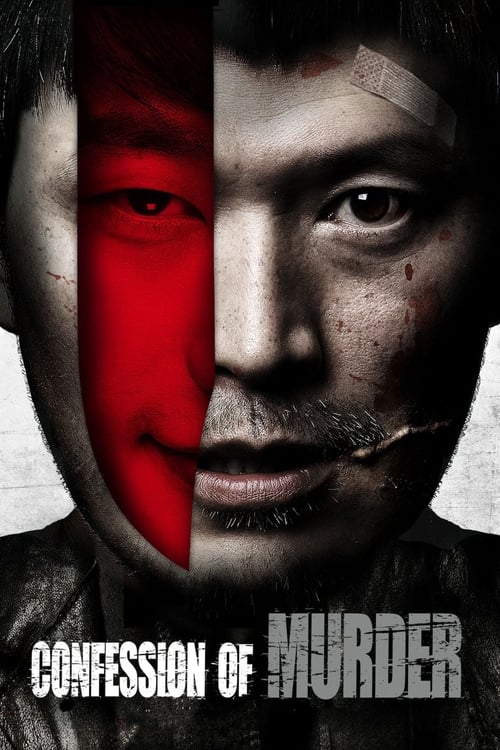
Confession of Murder
Plot
A serial killer reappears 15 years after his murder spree with a book detailing his crimes. The resentful cop who failed to catch him before is assigned to protect him. The families of the victims plan revenge. And as the media circus spirals out of control, a masked man called "J" appears claiming to be the real killer.
Get the Weekly Woke Watchlist
New and trending movies scored for woke bias, preachy messaging, and forced political themes — before you waste your evening.
No spam. One useful email per week.
Overall Series Review
Categorical Breakdown
The narrative focuses on a struggle between a detective, a serial killer, and the victims' families, all of whom are South Korean characters. The conflict is based entirely on moral failings, law, and personal merit (or lack thereof), not immutable characteristics. Casting is naturally colorblind for its setting, and there is no vilification of any specific ethnic group or forced insertion of diversity.
The film offers a pointed critique of the South Korean legal system, specifically the existence of a statute of limitations for heinous crimes, and the sensationalist nature of the domestic media that profits from tragedy. This is an internal, moral criticism of specific flawed institutions and not a condemnation of the entire culture or civilization. It instead champions the core, universal value of justice and accountability.
The main dynamic is a direct conflict between two male characters, the detective and the alleged killer. While the victims of the serial killer are women, the female characters, such as the victim's family member, are primarily defined by their grief and drive for vengeance, which is a traditional role in a crime thriller. The movie contains no elements of the 'Girl Boss' trope, the emasculation of male leads, or any anti-natalist/anti-family messaging.
The core plot is a traditional crime-and-vengeance story. The narrative contains no themes related to sexual ideology, centering of alternative sexualities, or discussion of gender theory. The familial relationships present serve as a motivation for the detective and the victim’s families to pursue the killer.
The core debate of the film centers on justice, repentance, and revenge outside of the law, which is a secular moral conflict. There is no open hostility toward religion, and the concept of justice being greater than man-made law implicitly acknowledges an objective moral truth. Faith is not a plot element and religious characters are not used as villains or bigots.
Get the Weekly Woke Watchlist
New and trending movies scored for woke bias, preachy messaging, and forced political themes — before you waste your evening.
No spam. One useful email per week.