Attack on Titan
Season 2 Analysis
Season Overview
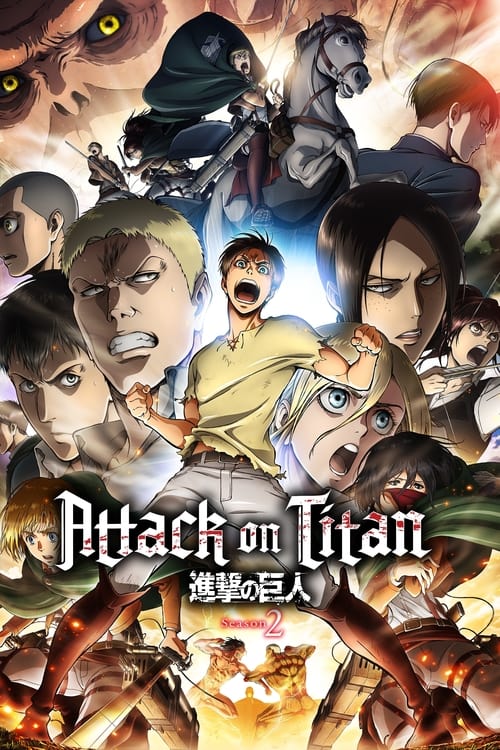
Eren Yeager and others of the 104th Training Corps have just begun to become full members of the Survey Corps. As they ready themselves to face the Titans once again, their preparations are interrupted by the invasion of Wall Rose—but all is not as it seems as more mysteries are unraveled. As the Survey Corps races to save the wall, they uncover more about the invading Titans and the dark secrets of their own members.
Season Review
Categorical Breakdown
Characters are judged primarily by their competence and moral choices in a universal meritocracy, especially within the Survey Corps. The plot introduces the concept of a fictional 'race' (Eldians) being the cause of a great historical conflict, which serves as a commentary on systemic discrimination and collective guilt. The world is homogeneous and there is no forced insertion of diversity or vilification of 'whiteness' in the contemporary Western sense.
The institutions of the home culture are framed as fundamentally corrupt and actively destructive to its citizens, particularly the government and the Church of the Walls. The narrative criticizes a system that prioritizes secrecy and elite comfort over the survival of the people. This is a sharp critique of established authority, but the characters' fight is still for the continued existence and freedom of their civilization.
Female characters like Mikasa and Sasha are hyper-competent, courageous, and non-sexualized soldiers, often acting as powerful protectors and leaders, which fits the 'Girl Boss' archetype. However, male characters are also portrayed as capable, complex, and vital leaders, preventing a full narrative slide into male emasculation or the men being depicted solely as incompetent.
The core emotional arc for the character Ymir, whose story dominates the latter half of the season, is driven entirely by her devotion to Historia. Ymir’s explicit romantic desire for Historia is a foundational motivation for her actions, making a non-heteronormative relationship central to the plot's climax. A key secondary character, Hange Zoë, is also deliberately gender-ambiguous in the original work.
The single organized religious institution shown, the Church of the Walls, is portrayed as an antagonistic and obscurantist force. The religion's primary role is to hide vital, life-saving scientific/historical truth from the populace, making 'faith' synonymous with fanatical ignorance, corruption, and obstructionism. Morality is frequently framed through the pragmatic necessity of survival rather than a transcendent, objective moral law.