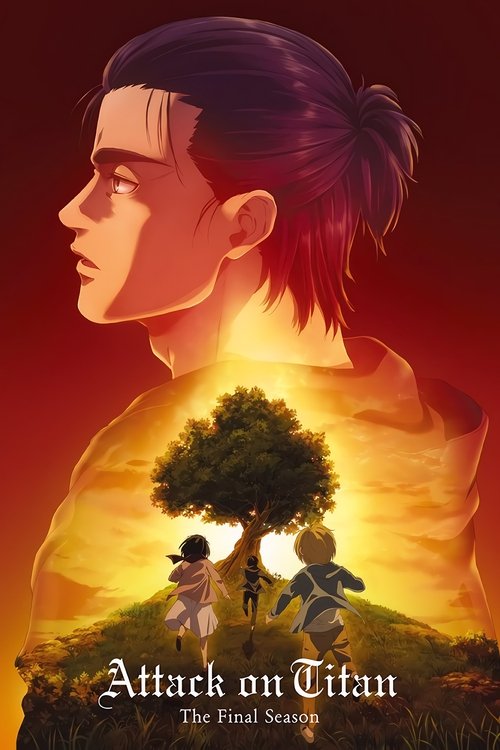
Attack on Titan
Season 4 Analysis
Season Overview
The truth revealed through the memories of Grisha's journals shakes all of Eren's deepest beliefs. There is no rugged but free land beyond the walls. There is a whole other world, equally full of oppression and war. Suddenly, the ambitions that have animated the Survey Corps for generations seem small and naive. What is there left to fight for?
Season Review
Categorical Breakdown
The plot centers entirely on the systemic oppression, historical trauma, and propaganda surrounding the fictional Eldian ethnic group, whose bloodline defines them as a subjugated or feared race. The narrative directly explores how immutable characteristics (bloodline) are used to create a rigid, intersectional hierarchy of victim and oppressor across nations. The show’s core message revolves around the evils of judging individuals by the collective 'sins' of their ancestors’ group.
The central dramatic reveal is that the protagonist's home civilization is a relic of a world-conquering, brutal empire, forcing the characters to acknowledge that their ancestors committed horrific atrocities against the rest of the world. This framing makes the entire home culture and its foundation morally corrupt, aligning with civilizational self-hatred by destroying the naive, positive image of the homeland. However, the outside world is depicted as equally flawed, which lessens the overall score slightly.
Female characters consistently demonstrate extraordinary competence, holding high-ranking military and Titan-shifter positions, often surpassing their male counterparts in skill and strategic ability without relying on sexualization. The narrative is heavily meritocratic, but the prevalence of capable female 'Girl Boss' leaders and the portrayal of the non-binary Commander Hange Zoe pushes the score up. Male characters are not broadly depicted as incompetent or toxic.
The story contains a canonically lesbian relationship (Ymir and Historia) that is foundational to one main character's motivations, though the relationship itself is primarily explored in past seasons and via letter in this season. A major military commander, Hange Zoë, is confirmed by the author to be gender-ambiguous/non-binary. Sexual identity is not the focus of the main plot and there is no direct lecturing on gender theory; these elements exist within the larger narrative.
Organized religion is directly portrayed as a tool of political oppression and ignorance, exemplified by the 'Wallist' sect. The entire Titan mythology, which serves as the world's spiritual history, is revealed to be a mechanism of control and cyclical human trauma, not a transcendent divine truth. The core conflict is a philosophical debate on whether morality is objective or merely a subjective byproduct of power dynamics and historical narratives, strongly favoring the 'spiritual vacuum' interpretation.