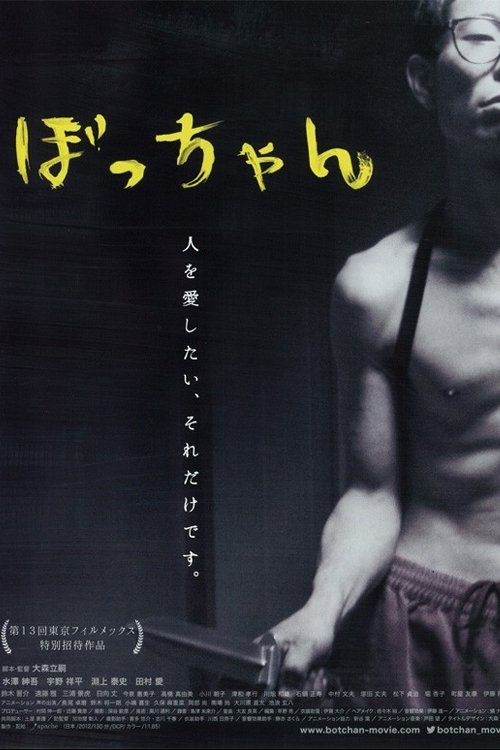
Bozo
Plot
Set in Nagano Prefecture, the movie stars Shingo Mizusawa (8000 Miles) as an awkward 28-year-old temporary factory worker named Kaji; a character partially modeled after the perpetrator of the 2008 Akihabara massacre. His social interactions are limited to his postings on internet message boards until he starts hanging out with a co-worker named Tanaka (Shohei Uno) who suffers from the debilitating sleep disorder narcolepsy. The pair become involved in a predicament when they attempt to protect a girl named named Yuri (Ai Tamura) from their other co-worker Okada (Yasushi Fuchikami).
Get the Weekly Woke Watchlist
New and trending movies scored for woke bias, preachy messaging, and forced political themes — before you waste your evening.
No spam. One useful email per week.
Overall Series Review
Categorical Breakdown
The movie focuses on an internal Japanese social problem of class/status and psychological isolation (hikikomori-like figure) as the catalyst for violence. Characters are judged by their social standing and individual merits or failings, with no focus on race, whiteness, or forced diversity. The context is universally applicable social misery, not intersectional hierarchy.
The narrative attributes the main character's breakdown to intense pressure and social collapse within contemporary Japanese society, attempting to blame the murderer's social inaptitude on the pressure of society. This is a critique of the national 'home culture' and system, scoring low because it is not an attack on core Western values, nor a wholesale demonization of Japanese ancestors or traditional institutions.
The main female character, Yuri, is in a predicament and needs to be protected by the male protagonists, serving the classical damsel-in-distress role. The male characters are weak, but from social and psychological failure (self-loathing, narcolepsy), not from an explicit emasculating narrative. There is no 'Girl Boss' or anti-natalist messaging.
The story's core is not centered on sexual identity, but one element of a bully's motivation is weakly explained by the psychological theory of repressed homosexuality. This is an insertion of sexual ideology to explain toxicity, but it does not deconstruct the nuclear family or push a gender ideology agenda. The score is moderate because sexual theory is used to rationalize character behavior.
The core conflict revolves around social alienation, psychological trauma, workplace bullying, and a nihilistic obsession with internet communication. There is no presence of traditional religion or explicit anti-theistic themes, and no Christian characters are used as villains or bigots.
Get the Weekly Woke Watchlist
New and trending movies scored for woke bias, preachy messaging, and forced political themes — before you waste your evening.
No spam. One useful email per week.