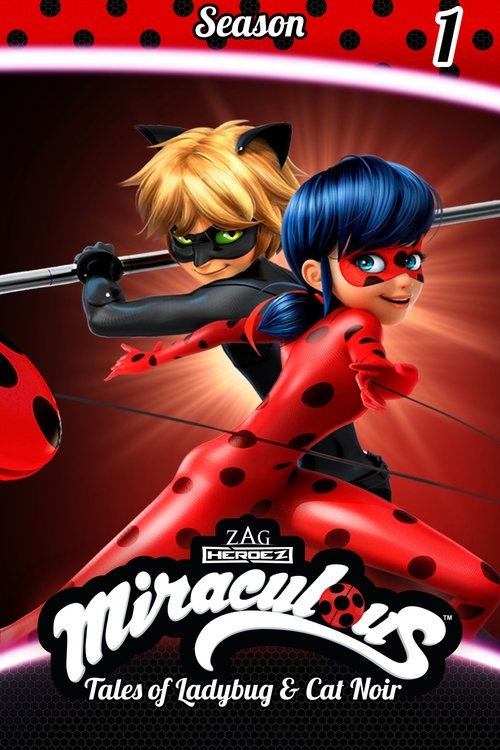
Miraculous: Tales of Ladybug & Cat Noir
Season 1 Analysis
Season Overview
Two high-school students, Marinette and Adrien, are chosen to become Paris’ superheroes: Ladybug and Cat Noir. They each have a Miraculous, a jewel linked to their the magical creatures (Kwamis) that give them powers.Their mission is to keep Hawk Moth – who wants to steal their Miraculouses – from wreaking havoc on the town by creating increasingly dangerous supervillains – all while living their high school lives and keeping their identities secret. At school, Marinette has a crush on Adrien but cannot tell him, so she acts awkwardly whenever he’s around. As a superhero, Cat Noir loves Ladybug, but his ego annoys her: Marinette prefers Adrien anyway! Throughout the school year and their adventures, Ladybug discovers many nice qualities in Cat Noir while Marinette grows ever closer to Adrien, making huge efforts to overcome her shyness.
Season Review
Categorical Breakdown
The main hero, Marinette Dupain-Cheng (Ladybug), is visibly half-Asian (Chinese/French), and the school setting features a diverse cast of secondary characters. The narrative promotes a multicultural vision of France. The plot does not rely on lectures about privilege or systemic oppression, but the protagonist's diversity and the theme of accepting non-traditional family structures are a noticeable component of the world-building.
The series is set in Paris, France, and the entire premise involves the heroes protecting this specific Western city and its citizens from destruction. The main institutions featured, like the school and the protagonist’s traditional family bakery, are generally viewed positively. The antagonist's goal is purely selfish, not an ideological rejection of Western civilization.
Ladybug is the clear leader of the superhero duo; she is the one who formulates the plan and executes the final strategic move in nearly every conflict. Cat Noir is consistently presented as the less effective partner, often serving as the reckless, joke-making, male sidekick who requires guidance. The female lead is instantly heroic, demonstrating the 'Girl Boss' trope, but the show is built upon a foundation of traditional, heterosexual romantic interest, which mitigates the anti-natalism score.
The entire season’s subplot revolves around the confused romantic feelings of the two main heterosexual characters—Marinette's crush on Adrien and Cat Noir's crush on Ladybug. The narrative adheres strictly to a normative structure, and there are no instances of centering alternative sexualities, deconstructing the nuclear family, or lecturing on gender theory within this season.
The core conflict is a classic good-vs-evil dynamic where the heroes embody virtues like courage and sacrifice, suggesting an objective moral framework. The source of the heroes' powers is a non-religious, ancient magical system of jewels and mystical creatures. The narrative contains no hostility or critique directed toward religion or traditional faith.