Miraculous: Tales of Ladybug & Cat Noir
Season 5 Analysis
Season Overview
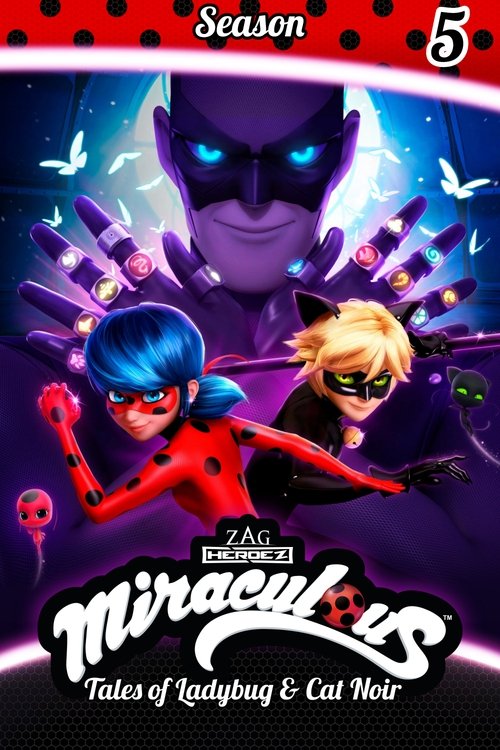
Marinette has lost the miraculouses and the kwamis. She is only with her miraculous and Cat Noir with his. Shadow Moth has never been so close to victory. Now he can give his akumatized persons miraculous powers to create ultra-powerful supervillains. But our heroes working together again in duo, will be more united than ever. This new trial will deeply mark their relationship and their private life. Nothing will be like before.
Season Review
Categorical Breakdown
The main villain of the entire arc is Gabriel Agreste, a wealthy, powerful, and abusive white Parisian male, who is defeated by the heroes. The primary hero, Marinette, a multiracial female, grows into the singularly competent leader and final problem-solver of the season. Her white male co-hero, Cat Noir/Adrien, is revealed to be a Sentimonster, a victim of his father's abuse lacking true free will, and is sidelined from the climactic final confrontation against his own father.
The narrative focuses on Ladybug and Cat Noir protecting Paris from a formidable threat, a theme of defending the home and community. The corruption is localized in the figure of the main antagonist and his powerful family, not framed as a rot fundamental to French or Western civilization itself.
Marinette is portrayed as the ultimate 'Girl Boss,' becoming a confident, near-perfect leader who makes all the major strategic choices and sacrifices. The narrative structurally sidelines Cat Noir, the male co-lead, from the most important conflict and positions him as a victim in need of protection. Marinette keeps critical life-altering secrets from him to 'protect' him, reinforcing her superior position as the capable figure.
The season contains multiple, explicit confirmations of alternative sexualities. Teacher Caline Bustier is shown to have a female partner, Gisele, establishing an openly lesbian couple. Classmate Zoé Lee is confirmed to have romantic feelings for Marinette, defining her as LGBTQ+. Another prominent classmate, Kim, is established as having two fathers, Mr. Vadim and Mr. Minh Cuong, which centers a two-father family structure in the children’s show.
The moral conflict is secular, driven by 'negative emotions' which Monarch corrupts via magic jewels, rather than any concept of transcendent evil or sin. The morality centers on humanistic virtues like 'trust, sacrifice, and the importance of teamwork.' Religion is absent from the core plot and moral discussion, resulting in a spiritual vacuum where morality is subjective to emotional control.