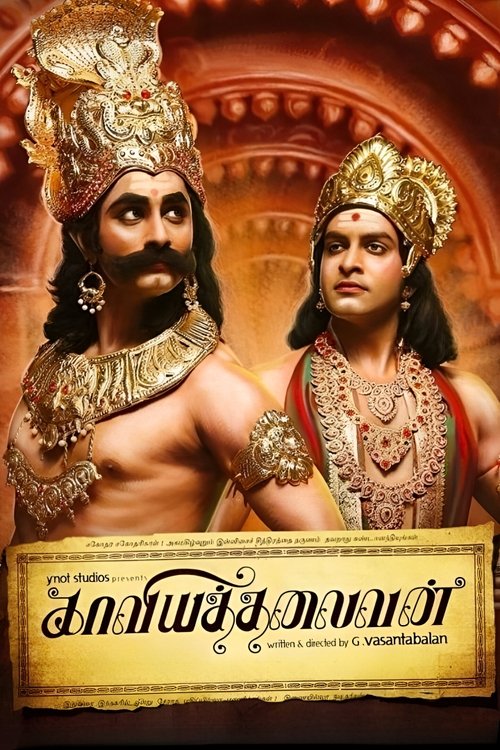
Kaaviya Thalaivan
Plot
Two rival artists at Sivadas Swamigal's drama troupe compete in everything they do. While one of them goes on to become successful, the other fails in life.
Get the Weekly Woke Watchlist
New and trending movies scored for woke bias, preachy messaging, and forced political themes — before you waste your evening.
No spam. One useful email per week.
Overall Series Review
Categorical Breakdown
The main conflict is a universal struggle of talent versus ego, reflecting a meritocracy where the protagonist, Kali, succeeds based on his superior artistic skill. The antagonist’s resentment is personal, not a lecture on systemic oppression or immutable characteristics. The narrative is colorblind to the modern political sense, focusing on individual character flaws.
The film is set in a celebrated traditional Indian context, showcasing and respecting the rich culture of Tamil theatre and its history. The political subplot of the freedom struggle involves anti-colonial (anti-British) sentiment, which is the reverse of civilizational self-hatred for the home culture. Traditional institutions and art forms are viewed positively.
The score is low because the main plot focuses on the male rivalry, but the female lead, Vadivambal, is a talented professional artist who joins the troupe, a role inspired by a historical figure. She is not a 'Mary Sue' but a gifted performer. The movie celebrates a woman’s artistic career and is not driven by anti-natal or male-emasculating themes, maintaining a complementarian structure typical of a historical period setting.
The story adheres to a normative structure, centering on traditional male-female pairings. An early historical detail shows one male character playing the 'sthripart' (female role) on stage, which was a common pre-cinematic theatrical convention, but this is a plot point about acting roles, not an exploration or promotion of alternative sexual or gender ideology.
The drama troupe is led by 'Thavathiru Sivadas Swamigal,' a guru or spiritual figure, indicating a respect for traditional spiritual and moral guidance. The antagonist's psychological torment is framed as a moral failure (envy), a classical concept of sin. The narrative relies on a transcendent moral framework of right and wrong without vilifying traditional religion as the root of evil.
Get the Weekly Woke Watchlist
New and trending movies scored for woke bias, preachy messaging, and forced political themes — before you waste your evening.
No spam. One useful email per week.