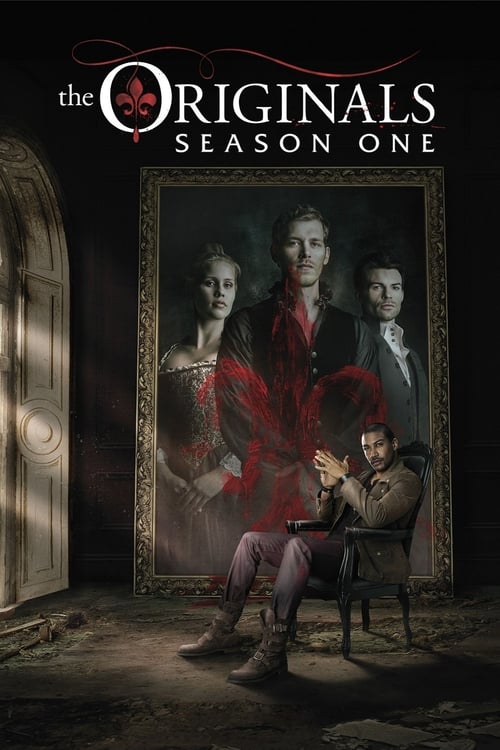
The Originals
Season 1 Analysis
Season Overview
Family is power. The Original Vampire family swore it to each other a thousand years ago. They pledged to remain together, always and forever. Now, centuries have passed and the bonds of family are broken. Time, tragedy and hunger for power have torn the Original Family apart. When Klaus Mikaelson, the original vampire-werewolf hybrid, receives a mysterious tip that a plot is brewing against him in the supernatural melting pot that is the French Quarter of New Orleans, he returns to the city his family helped build. Klaus’ questions lead him to a reunion with his diabolical former protégé, Marcel, a charismatic vampire who has total control over the human and supernatural inhabitants of New Orleans.
Season Review
Categorical Breakdown
The main conflict is framed as the wealthy, aristocratic, and primarily white Original family returning to 'recolonize' New Orleans from its current ruler, Marcel, a charismatic man of color who was enslaved and later adopted by Klaus. Marcel's and the local witches' attempts to seize or maintain autonomy are often positioned against the Mikaelsons' quest for power, creating a dynamic that aligns with a supernatural tale of privileged conquerors displacing marginalized groups. Marcel's historical oppression by 'whiteness' is woven into his character's toxic father-son bond with Klaus. While all characters are morally corrupt vampires/witches, the central power structure favors the most established 'white' family.
The central thematic pillar of the season is 'Always and Forever,' a potent celebration of the family unit, regardless of its dysfunction. Institutions like family and legacy are not presented as sources of corruption, but as the only transcendent bonds in a chaotic world. The characters' monstrous nature is attributed to their vampirism and personal trauma, not a self-hatred of their own ancestral Western heritage. The narrative values loyalty to one's own people and history, which is the very foundation of the Mikaelson's mission to reclaim the city.
Female characters like Rebekah, Hayley, and Davina are powerful, complex, and hold significant agency as main players, which prevents a very high score. However, a pattern emerges where these powerful women are frequently manipulated, controlled, or defined by their relationships and conflicts with the hyper-masculine Original brothers (Klaus and Elijah). A key plot point is Rebekah's desire to escape the control of her brothers. Crucially, the entire season is driven by the protective instinct for an unexpected newborn baby, celebrating and centering motherhood as a powerful, vital force and source of salvation, which is directly anti-anti-natal.
A gay character, Josh Rosza, is introduced early in the season as a recurring figure, but his sexual identity is not central to the main plot, nor does it serve as a source of political lecturing. The primary dramatic focus revolves around the traditional male-female pairings (Klaus/Hayley, Elijah/Klaus's love interests) and the formation and protection of the nuclear family unit. The presentation of a homosexual character is 'unforced,' and the narrative's core structure remains heteronormative without the deconstruction of the nuclear family.
The core moral law is set by the objective evil of murder and human sacrifice, a practice required by the local witches' ancestral 'Harvest' ritual, which is based on a pagan/voodoo-inspired faith. A recurring human character, Father Kieran O'Connell, is a non-vilified Catholic priest who acts as a moral authority and attempts to maintain human law against the supernatural factions. The show grounds its moral conflict in transcendent objective evil (murder) and personal self-sacrifice, not the vilification of Christianity or the promotion of moral relativism.