The Originals
Season 2 Analysis
Season Overview
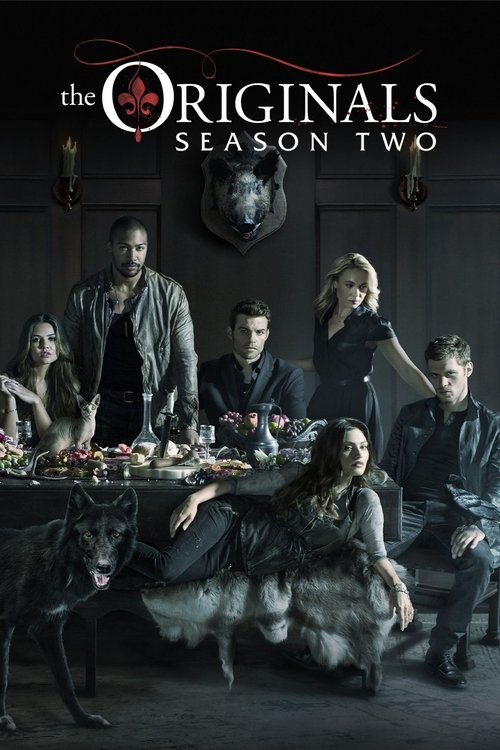
In season two, a new status quo must be adjusted to, as the newly empowered werewolves control the city. Plus, Klaus struggles with weaknesses and Elijah fights to save Hayley — now a hybrid — from a vicious spiral of self-destruction.
Season Review
Categorical Breakdown
The narrative frames the conflict around warring supernatural species—vampires, werewolves, and witches—which functions as a thinly veiled allegory for inter-group power struggles and social hierarchy. The central protagonists are the Mikaelson family, white European aristocrats who are framed as a colonizing power attempting to 'reclaim' New Orleans from other, more diverse factions, including Marcel's largely non-white vampire community and the local werewolf packs. Marcel, a black character who was formerly an enslaved person, experiences a diminished role as he is sidelined from King of the city to a subordinate supporting the Originals, which reinforces a problematic power dynamic. The plot's underlying structure favors the established 'white' power structure but the allegory remains prominent.
The primary antagonists of the season are the main characters' own ancestors, their parents Mikael and Esther, and their aunt Dahlia, all of whom are ancient figures from their European (Norse) past. Their ancestors return to condemn and destroy the Original siblings, framing their entire lineage as a monstrous mistake and a curse. This directly constitutes a vilification of the family’s heritage and roots. However, the family unit itself is ultimately celebrated, as the Mikaelson siblings' overriding motivation is the sacrifice necessary to protect the life and future of the infant Hope, which acts as a bulwark against the destructive ancestral hatred.
A main character, Elijah Mikaelson, explicitly uses the phrase 'devout feminist' to describe himself during an episode, which is a direct insertion of modern political language into a centuries-old character's dialogue. The main female leads are strong and independent, such as Hayley, who becomes a powerful hybrid and a Queen of her werewolf pack. However, her storyline is deeply focused on the trauma of separation and the drive to protect her child, a maternal plotline that is not anti-natalist. The main female villains, Esther and Dahlia, are incredibly powerful matriarchs whose core evil is their twisted, destructive relationship with motherhood and children (Esther regretting her children, Dahlia demanding children for sacrifice), which counters the simplistic 'Girl Boss' trope by making female-led power evil and anti-family.
A secondary, established gay male character, Josh, continues to appear and engages in a romantic storyline with a new male werewolf character, Aiden. This inclusion provides representation within the supporting cast. The depiction is normalized and does not become a central plot point for political lecturing. The show does not engage in storylines related to transitioning, gender ideology, or a direct effort to deconstruct the nuclear family beyond the inherent non-traditional (immortal, multi-species) nature of the central Mikaelson unit.
The show is immersed in supernatural and mystical systems, including ancestral magic, voodoo, and powerful witches, which operate as transcendent belief systems for the various factions. The moral framework is generally based on familial loyalty, personal honor, and power dynamics typical of a dark fantasy setting, rather than objective, Judeo-Christian truth. There is no active vilification of traditional Christian religion, as it is largely absent from the narrative focus. The morality is highly relativistic, where the 'good' characters are themselves murderous vampires seeking only to protect their own interests, placing the show squarely in the subjective morality camp without being overtly anti-theistic.