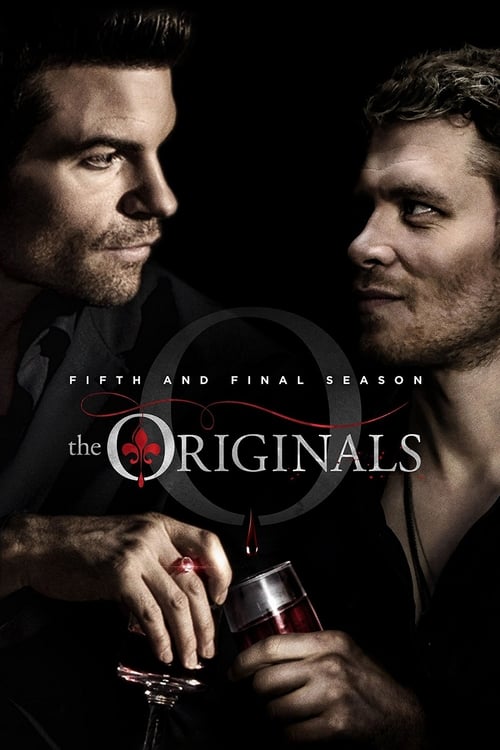
The Originals
Season 5 Analysis
Season Overview
The age old Mikaelson family has spent centuries fighting against legions of enemies. The original vampires have strived since the beginning of time to protect their family, no matter what the cost. The fifth and final season is no different as the Mikaelsons must once again count on the strength of their unbreakable family bond even after swearing to stay away from each other for good.
Season Review
Categorical Breakdown
The main antagonists, the purist vampires led by Greta, are a clear analogue for white supremacist and nativist ideology, openly advocating for 'racial purity' and the extermination of hybrids and werewolves. The narrative positions the mixed-species Mikaelson family and the established Black lead, Marcel Gerard, as the heroic resistance against this 'Nazi-like' faction. The plot is fundamentally driven by a fight against systemic, species-based bigotry that mirrors modern intersectional concerns, where character merit is secondary to bloodline status (for both protagonists and villains).
The entire family plot is focused on defending the home and ancestral city of New Orleans, with the core mantra 'Always and Forever' centering on the institution of the family unit. Klaus Mikaelson's entire redemption arc culminates in a father's ultimate sacrifice to save his daughter and secure her future in the city he helped build. The narrative views the family and home not as corrupt institutions, but as the final, absolute shields against chaos and death.
Hope Mikaelson is introduced as the powerful, capable protagonist for the future, a 'Tribrid' who demonstrates control over her powers and the resolve to defeat the villain faction. Her mother, Hayley, makes a major sacrificial play to protect her. The season features a core female character, Freya, entering a stable marriage with another woman, Keelin. While Klaus's final sacrifice is a strong, protective act of fatherhood, his and Elijah's dramatic exit serves to dismantle the original, powerful male structure so the new, younger female lead can rise without competition, which pushes the narrative toward the 'Girl Boss' trope for the spin-off series.
The main supporting protagonist Freya Mikaelson marries her girlfriend, Keelin, and the couple plans for a future, family-focused life together. This firmly integrates a same-sex couple into the core family unit and portrays their union as normative and aspirational. The death of the recurring gay male character, Josh, is used for a sentimental, romantic reunion with his deceased male partner, which centers the alternative sexuality within the show’s emotional, life-affirming 'afterlife' structure.
The show is explicitly set in a world where good and evil are relativistic concepts, exemplified by the central character, Klaus, who is a 'monstrous tyrant' whose 'redemption' is personal and familial rather than spiritual. The narrative consistently champions a personal, internal moral code (love for family) over any form of transcendent law. While the supernatural world is steeped in cultural mysticism (New Orleans Voodoo, ancestral witches), Christian faith is largely absent, positioning the family's subjective moral code as the ultimate truth. A prominent battle against the extremist vampires takes place inside a church, which is then destroyed by Hope's raw power.