The 100
Season 7 Analysis
Season Overview
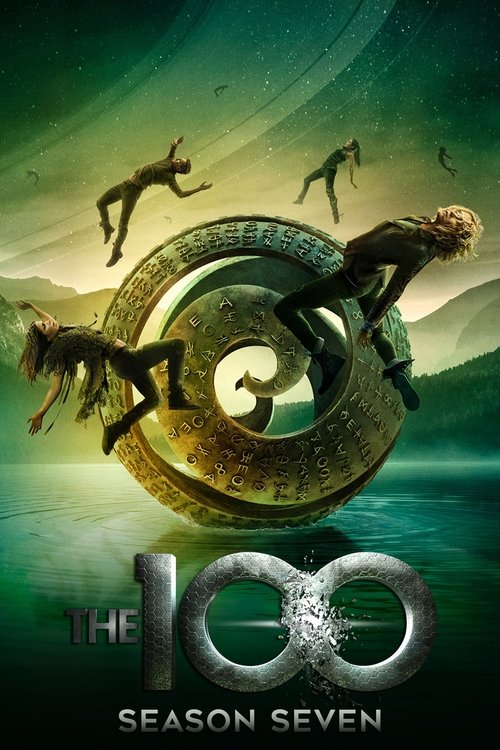
After arriving on a new planet, our heroes found a place where they hoped to try again. Clarke and Bellamy led a group down to this mysterious world to start anew, but not everything on Sanctum was as perfect as it seemed. Despite their determination to do better, threats both seen and unseen once again forced them to fight for their lives and the future of humanity.
Season Review
Categorical Breakdown
The main hero collective is overwhelmingly composed of women and people of color who occupy all key positions of power and technical expertise. The primary white male co-lead, Bellamy Blake, is sidelined for much of the season and his return involves him embracing a misguided, cult-like faith, leading directly to his death at the hands of the white female protagonist, Clarke. This narrative choice supports the trope of the male figure's leadership/morality being inferior or dangerous in comparison to the diverse female collective.
The central conflict involves an alien Judge deeming humanity unworthy of survival due to its cyclical, ancestral tendency toward tribalism and violence. The Judge's verdict, which effectively condemns all of human civilization as inherently flawed and beyond redemption, is a powerful act of civilizational self-hatred. The 'successful' ending is 'Transcendence,' a collective dissolution of human culture and identity, which completely rejects the heritage of the species.
Female characters hold virtually all positions of leadership, tactical authority, and moral decision-making, fulfilling the 'Girl Boss' trope without significant male challenge. The most significant element is the series' ultimate message of anti-natalism, as the final, 'higher' form of existence (Transcendence) is sterile and non-reproducing. The handful of survivors who reject Transcendence are also sterilized by the Judge, effectively condemning the human species to extinction and validating the ultimate futility of biological family creation.
Alternative sexualities are a normalized part of the show's world, where characters like the bisexual lead Clarke and the gay male hero Miller maintain central, non-sexualized, and powerful roles. The narrative consistently champions the 'found family' unit—a collection of non-biologically related individuals—over the traditional nuclear family, which aligns with a queer theory lens that deconstructs traditional social structures.
All forms of organized faith explored in the season—the Primes' religion, the Grounder traditions, and the Disciples' cult led by the 'Shepherd' Cadogan—are exposed as based on either technological fraud, ancient lies, or violent manipulation. The main male hero is killed by the protagonist after he embraces a militaristic faith. The spiritual climax is a 'test' administered by an omnipotent, quasi-divine entity that is purely scientific/metaphysical, ultimately validating a secular evolution over any transcendent, objective moral or religious law.