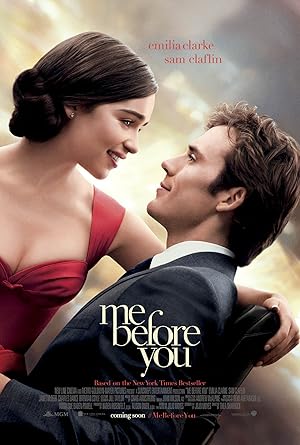
Me Before You
Plot
Lou Clark knows lots of things. She knows how many footsteps there are between the bus stop and home. She knows she likes working in The Buttered Bun tea shop and she knows she might not love her boyfriend Patrick. What Lou doesn't know is she's about to lose her job or that knowing what's coming is what keeps her sane. Will Traynor knows a road accident took away his desire to live. He knows everything feels very small and rather joyless now and he knows exactly how he's going to put a stop to that. What Will doesn't know is that Lou is about to burst into his world in a riot of color. And neither of them knows they're going to change each other for all time.
Get the Weekly Woke Watchlist
New and trending movies scored for woke bias, preachy messaging, and forced political themes — before you waste your evening.
No spam. One useful email per week.
Overall Series Review
Categorical Breakdown
The narrative highlights a major division between the wealthy, aristocratic male and the working-class female, acknowledging economic disparity as a significant barrier. The central conflict revolves around Will's disability, presenting a life with physical impairment as one fundamentally not worth living. This framing was criticized by activists for reinforcing a 'better dead than disabled' message, using disability as a plot device to inspire the able-bodied character. The protagonist, Lou, benefits directly from the systemic advantages and subsequent death of the wealthy man, gaining the funds needed for her 'live boldly' ambition.
The film is set in a traditional English locale, primarily utilizing the aesthetic of a wealthy English country estate and a small, working-class town. The plot critiques Will's personal loss of his adventurous past and his wealthy family's inability to save him, but it does not frame Western civilization or English heritage itself as fundamentally corrupt or racist. The conflict is existential and personal rather than a wholesale deconstruction of institutions.
Louisa Clark begins as a financially motivated caretaker who is dependent and unambitious. Her long-term boyfriend is portrayed as self-centered and lacking the emotional depth of Will. The central romantic resolution involves the male love interest choosing death, a decision that literally frees and funds Lou's anti-natalist, independent, career-focused future of travel and self-discovery. The 'best' path for the heroine is presented as one where she is unattached, using a deceased man's money to realize her 'girl-boss' travel dreams, having rejected the stable but 'limited' family life.
The story is a conventional romantic drama focused on a heterosexual relationship between cisgender characters. The narrative adheres strictly to a normative structure, and there is no presence of alternative sexual ideologies, deconstruction of the nuclear family through a queer lens, or commentary on gender identity.
The core thematic message is a powerful endorsement of autonomous individual choice over life itself, promoting assisted suicide as a dignified and loving solution to suffering. This explicitly champions a subjective and existential moral framework—that life's value is purely conditional on one's quality of experience—over any transcendent or objective moral law that would value life regardless of physical condition. This position is a form of moral relativism rooted in a nihilistic rejection of life without full physical capability.
Get the Weekly Woke Watchlist
New and trending movies scored for woke bias, preachy messaging, and forced political themes — before you waste your evening.
No spam. One useful email per week.