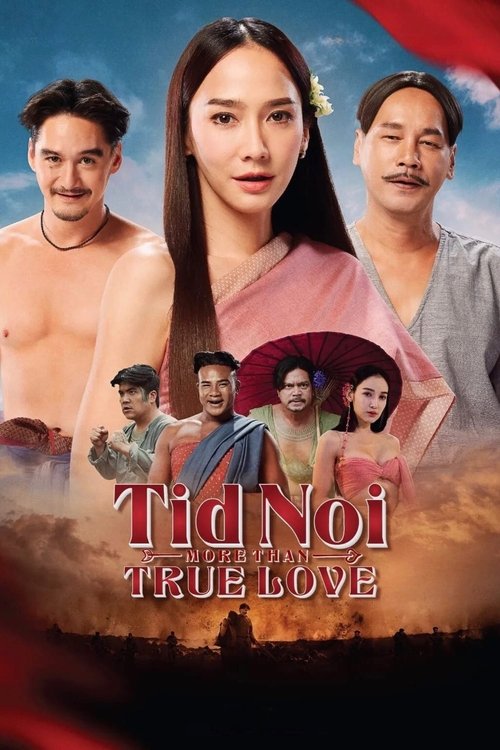
Tid Noi: More Than True Love
Plot
True love legend of Tid Noi, a man who has a stable love, true love, true love, true love, famous beautiful woman of the era. He loves and takes care of her like a woman in his heart, but Tid Noi's love is not easy.
Get the Weekly Woke Watchlist
New and trending movies scored for woke bias, preachy messaging, and forced political themes — before you waste your evening.
No spam. One useful email per week.
Overall Series Review
Categorical Breakdown
The film is a Thai production about Thai people in a historical Thai setting. Race-based political conflict is not present. Character value is judged by actions within the traditional romantic plot structure. There is no vilification of 'whiteness' or forced diversity, as the casting is culturally authentic to its setting.
The film’s historical genre and focus on a traditional love story and local customs suggest an affectionate or comedic look at a local Thai village and its way of life. The narrative does not contain any hostility toward the native culture, ancestors, or core institutions like family and tradition. The concept of Western civilizational self-hatred is irrelevant to this non-Western production.
The main female character, Nak, is desired by two men, making her an object of romantic pursuit. The plot features the male lead, Tid Noi, seeking a dowry to secure her, which reinforces a traditional family and courtship structure. While the men (especially Tid Noi) are often the butt of physical or romantic comedy, there is no evidence of a 'Girl Boss' Mary Sue trope or an anti-natal/anti-family message.
A supporting role is played by an openly gay/trans actor, which is common in Thai comedy. This type of character, often a *katoey* (transgender woman), is usually a comedic fixture who is integrated into the social fabric but does not serve to deconstruct the nuclear family or deliver gender ideology lectures. The core plot remains centered on a traditional male-female pairing, keeping the focus normative, though the presence of the integrated queer-coded character slightly raises the score from a perfect '1'.
As a historical Thai film, the cultural setting is implicitly Buddhist, with a monk listed in the cast, indicating a respectful inclusion of the traditional religious landscape. The film focuses on themes of true love and commitment, not on moral relativism or hostility toward organized religion.
Get the Weekly Woke Watchlist
New and trending movies scored for woke bias, preachy messaging, and forced political themes — before you waste your evening.
No spam. One useful email per week.