Narcos
Season 3 Analysis
Season Overview
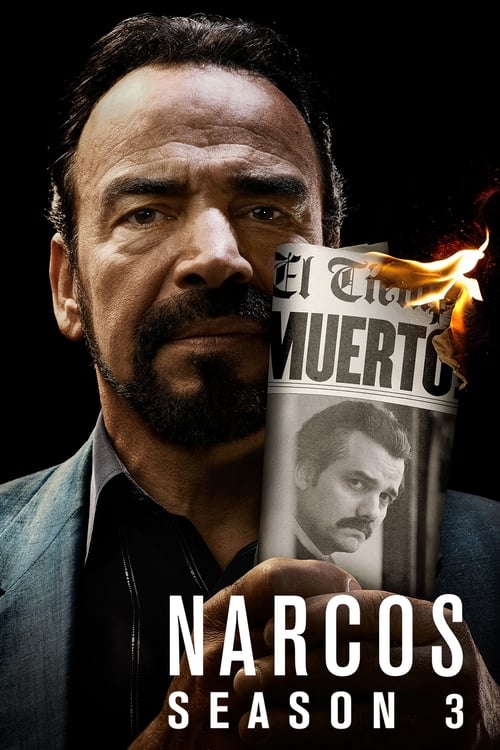
Season three shifts its focus to Pablo Escobar’s real-life successors in the drug trade: Colombia’s Cali Cartel, "the biggest drug lords you’ve probably never heard of."
Season Review
Categorical Breakdown
The narrative is centered on a conflict driven by professional competency and criminal merit. Characters are defined by their ruthlessness, intelligence, or commitment to justice, regardless of their race or origin. The DEA's leadership remains ethnically diverse, with the central hero being Hispanic American, but the plot avoids lecturing on intersectional privilege or vilifying characters based on immutable characteristics. All major white and non-white characters are judged solely on their morality and actions.
The show is highly critical of the massive corruption within the Colombian government and political system, suggesting the home culture's institutions are fundamentally compromised by drug money. It also indicts the complicity of the US financial system and global corporations in allowing money laundering, which suggests a critique of the modern Western financial order. However, the American DEA agents and their righteous Colombian partners are portrayed as heroes fighting the chaos, positioning them as preservers of order and justice, not as carriers of civilizational self-hatred.
The core cast of kingpins and law enforcement is overwhelmingly male, adhering to the historical and genre-specific 'masculine fraternity' of the drug war. Female characters are mostly relegated to traditional roles as wives, domestic partners, or victims of violence and circumstance, serving primarily to raise the emotional stakes for the male characters. The narrative actively avoids 'Mary Sue' or 'Girl Boss' tropes, with the dynamics strongly reflecting traditional, male-centric power structures.
One of the four central leaders of the Cali Cartel, Helmer 'Pacho' Herrera, is openly and successfully gay with a male lover. He is a prominent and powerful figure within the organization. The narrative explicitly highlights that his fellow cartel godfathers did not 'forsake' him for his sexuality, portraying him as a centered, powerful character whose sexual identity is integrated and accepted within the criminal power structure, which is a high-intensity centering of alternative sexuality.
There is no overt hostility toward religion. The spiritual vacuum is the moral relativism and greed of the cartel itself. In contrast, the voiceover narrative establishes a positive, transcendent moral basis for at least one key law enforcement figure, comparing the police general's motivation to that of 'holy knights' on a 'mission from God,' using traditional faith and morality as a source of strength and noble purpose.