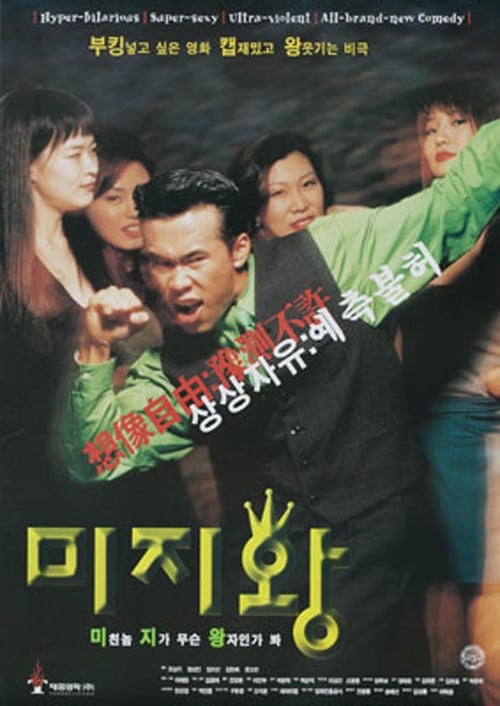
Ambiguous Man
Plot
A well-known womanizer is set to marry the daughter of wealthy business man. However, on the day of the wedding, he goes missing. The police are called and begin an investigation, only to see some surprising witnesses come forward.
Get the Weekly Woke Watchlist
New and trending movies scored for woke bias, preachy messaging, and forced political themes — before you waste your evening.
No spam. One useful email per week.
Overall Series Review
Categorical Breakdown
The movie is a South Korean production with a Korean cast and setting, meaning it does not contain the vilification of whiteness, historical race-swapping, or forced insertion of Western-style intersectional diversity. The conflict is based on character's actions (womanizing) and class (wealthy conglomerate daughter), not immutable characteristics.
The movie is a domestic Korean comedy/mystery. Any critique is directed toward the personal morality of the characters or perhaps the wealthy elite (the bride's family), which is standard social satire. It is not an attack on the foundational institutions or civilizational values of Korea, nor does it critique Western civilization.
The score is moderate because the plot hinges on the male lead's moral failure as a womanizer. The female characters—the older, powerful bride (daughter of a conglomerate) and the key female witnesses—are highly central to the narrative and possess agency, contrasting sharply with the groom's flawed masculinity. This leans toward an anti-male/pro-female agency dynamic, but does not include explicit anti-natalist or 'perfect female lead' tropes.
The narrative is centered entirely on a traditional male-female marriage and the fallout from a womanizer's actions. There is no presence of alternative sexual ideologies, deconstruction of the nuclear family, or lecturing on gender theory.
As a comedy/mystery focused on a personal moral scandal, there is no evidence of hostility toward religion or a narrative promoting moral relativism. The exploration of a 'womanizer' and his failure implies a conventional moral framework is still in place.
Get the Weekly Woke Watchlist
New and trending movies scored for woke bias, preachy messaging, and forced political themes — before you waste your evening.
No spam. One useful email per week.