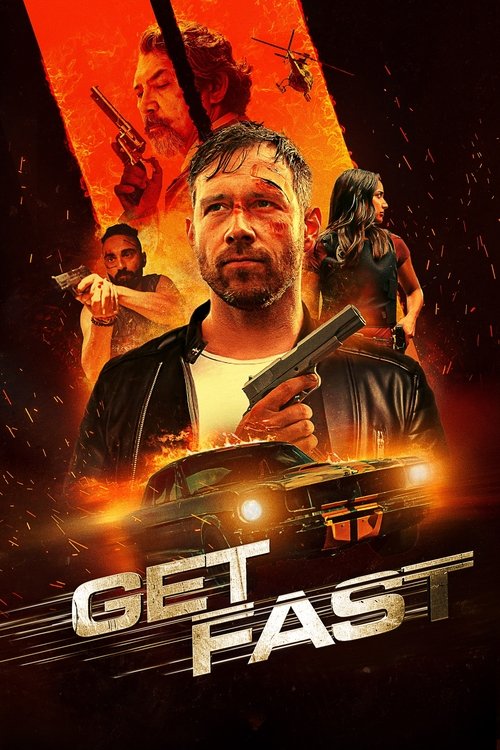
Get Fast
Plot
When The Thief’s partner is kidnapped after stealing millions in cash from a merciless drug lord named Nushi, he reluctantly teams up with an angst-ridden orphan to rescue him. Nushi enlists her most trusted hitman, The Cowboy, a lovable charmer who’s quick with his guns, to track down the Thief. Guns, cars, and explosions will give the newfound partners a head start, but how long will they be able to keep it up?
Get the Weekly Woke Watchlist
New and trending movies scored for woke bias, preachy messaging, and forced political themes — before you waste your evening.
No spam. One useful email per week.
Overall Series Review
Categorical Breakdown
The main protagonist, The Thief, is a competent white male lead. The main antagonist, Nushi, is a ruthless female drug lord, and a corrupt police officer, Ravi, is a woman of color. Characters are judged solely on their professional capability in the crime world. The casting is colorblind, showing a mix of races and genders among the heroes, villains, and supporting players without any apparent attempt to lecture on privilege or vilify whiteness.
The plot is a simple action-crime thriller focusing on an illicit chase for money. The narrative does not criticize Western civilization, home culture, or ancestors. Institutions like nation or heritage are irrelevant to the story's core conflict of criminal versus criminal.
The main antagonist, Nushi, is a merciless and highly competent crime boss, a powerful female character. A corrupt cop, Ravi, is also a ruthless woman. However, the male lead, The Thief, and the male hitman, The Cowboy, are equally competent and dangerous. The film establishes strong male and female characters without suggesting the emasculation of the male lead or explicitly pushing an anti-natalist message.
The narrative focuses exclusively on the conflict between thieves and a drug lord. There is no centering of alternative sexualities, deconstruction of the nuclear family, or lecturing on gender theory. The structure is normative and focused on action film tropes.
The movie is an action film with themes of loyalty and revenge within the criminal underworld. There is no content relating to religion, hostility toward Christianity, or discussion of objective morality. The film operates on a subjective moral plane dictated by criminal pragmatism without a spiritual vacuum lecture.
Get the Weekly Woke Watchlist
New and trending movies scored for woke bias, preachy messaging, and forced political themes — before you waste your evening.
No spam. One useful email per week.